Hey there, if you’ve ever dabbled in industrial alignment, metrology, manufacturing, or even something as everyday as marking tile for installation, you know picking the right laser module makes all the difference. I’ve been supplying uniform line laser modules for what feels like forever now, and I still get questions from folks confused about why their go-to laser (the point ones, the spot ones, the standard angled lines) aren’t cutting it. Let’s break this down straight—no stuffy jargon, no corporate fluff, just the real advantages of uniform line laser modules over every other type I’ve worked with. Uniform Line Laser Modules
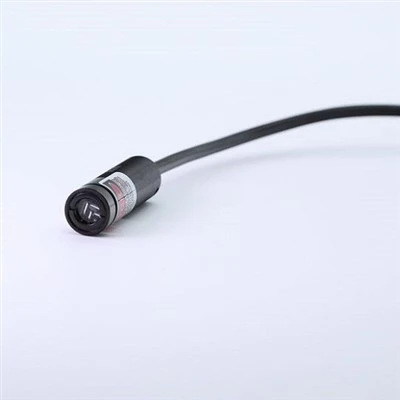
First off, let’s get one thing straight: not all lines are created equal. I see so many people grab a standard line laser module because it’s cheap or what they’ve always used, only to run into headaches. What’s a standard line, anyway? It’s the wobbly, uneven line that gets brighter right in the middle and fades out at the ends—like holding a flashlight up to a piece of paper, that bright blob fading at the edges. A uniform line laser? That’s a flat, even line across its entire length, no hotspots, no dimming, no weird gaps. And that consistency is game-changing, full stop.
Let’s start with industrial alignment, because that’s where I cut my teeth with these modules. Think about a auto body shop lining up door panels—they need a straight line that’s consistent from the fender to the door edge, no bright middle that makes them think they’re aligned when the ends are off. Or woodworkers setting up a table saw fence, trying to make 10 identical 8-foot boards. If you use a standard line laser, the middle of your line is 10x brighter than the ends. When you’re sighting down that line, your eye (and your brain!) tricks you into focusing on the bright part, so you might miss that the end of the line is off by a millimeter. That’s tiny, but when you’re talking about thousands of parts a day, that millimeter adds up to wasted material, rework, even scrap. I had a customer last year, a precision packaging company, switching from standard line modules to mine because their old setup was tossing 5% of their blister packs because the seal line was misaligned. The uniform line fixed that overnight—no more misaligned seals, no more scrap. Compare that to point or spot lasers, too. If you’re trying to align a long conveyor, a point laser means you’re chasing a dot up and down a 20-foot line, not having a reference that covers the whole path. You have to stop and reposition the laser every 10 feet, which slows down your workflow. Uniform line lasers let you set it once, walk the length of the conveyor, and confirm alignment in 2 seconds. That’s the kind of efficiency no other laser type can touch here.
Next, metrology and measurement applications—this is where precision is non-negotiable, and the weaknesses of other lasers become glaring. Let’s say you’re doing dimensional inspection, measuring the flatness of a steel plate, or checking the spacing between two components in a medical device. A standard line’s uneven brightness makes it super hard to get accurate readings from computer vision or even manual calipers. Cameras pick up the hotspot, so edge detection algorithms (the ones that run most automated inspection systems) get confused—they think the line edge is where the bright part starts, not the actual sharp edge of the laser beam. Spot lasers? Even worse. You’re trying to capture a continuous measurement, not a single point, so you end up with gaps in your data. I’ve worked with a lab that does aerospace part inspection—they were using spot lasers and missing tiny warps in turbine blades because the spot was too small, and they couldn’t get a full profile of the blade edge. Switched to uniform line modules, and their inspection accuracy jumped 12% on average. Another win for uniformity. And don’t get me started on line width consistency. Most standard line lasers have line width that changes along the length—narrow in the middle, wide at the ends. A uniform line laser keeps the exact same width from start to finish. That’s critical for things like laser marking, where you need a consistent line width for logos or text. If your line is wider at the end, your text will look distorted, like a bad handwriting job, and you’ll get rejected by clients for branding or part marking.
Then there’s the durability and environmental stuff, which people often overlook but makes a huge difference for folks working in tough conditions. Wait, I know what you’re thinking: “Doesn’t every laser module hold up to dust, heat, cold?” Not really, but uniform line modules have a leg up here because of how their optics are built. Most standard line lasers use a simple cylindrical lens that’s designed to stretch a point beam into a line, but that lens isn’t optimized for even illumination. The heat they generate is concentrated, especially at the hotspot, which makes them more prone to thermal drift—meaning the line will shift or go wobbly after an hour of use. That’s a nightmare for a night shift crew running a 24-hour production line. Uniform line lasers use specialized diffractive or homogenizing optics (sounds fancy, but it just means the beam is shaped to spread evenly across the line) that dissipate heat more uniformly. I have customers working in outside construction, in sub-zero temps in Canada and 110°F heat in Texas, and their uniform line lasers hold steady for 12 hours straight, no drift. Compare that to point lasers, which are solid but not designed to cover large areas, and standard line lasers, which need to be re-calibrated every few days when they run hot. Even spot lasers can have thermal drift, but since they’re smaller, it’s less noticeable—until you need that full line coverage.
Oh, and let’s talk about ease of use and setup, because I know no one wants to spend half their shift calibrating a laser. Standard line lasers are cheap, I’ll give them that, but you get what you pay for. Most require you to adjust knobs to fix the hotspot or wobbly line, and even then, after a few months of use, the optics get misaligned, and you’re adjusting again. Point lasers are even simpler, but again, you have to move them around for any long alignment job. Uniform line laser modules? We build them pre-calibrated at the factory, so when you take it out of the box, you just mount it, plug it in, and it’s good to go. No adjusting, no tweaking, no fighting the line to get it straight. I had a customer who runs a tile installation company—they were using manual chalk lines and standard line lasers before switching. Their setup time per bathroom went from 2 hours to 20 minutes, because they just mount the uniform line laser on a tripod, line it up with the wall, and cut tile straight off the line. No more chalk lines smudging, no more waiting for the standard line to stop flickering. That’s not just a small win—that’s saving them money every single job.
Wait, I need to address a common pushback I get: “Uniform line modules are more expensive than standard ones, right? Isn’t that a downside?” Yeah, initial cost is a bit higher, but let’s do the math. If you’re wasting 5% of your parts with a standard line, that’s 50 parts out of 1000 gone, every day. Let’s say each part is $10—that’s $500 a day, $15k a month, $180k a year wasted. The difference between a standard line module and a uniform one is like $200. That’s a no-brainer. And over time, the uniform line lasts longer, because they’re built with better optics, so you’re not replacing them every 6 months like you would a cheap standard line. Point lasers: if you’re using multiple point lasers to get a line across a long distance, you’re buying 2, 3, even 4 lasers and the mounts for them. That’s way more expensive than one uniform line module. I’ve had customers calculate their ROI in as little as 2 weeks after switching—two weeks of fixing scrap and setup time, and they paid for the module. That’s a no-brainer, not a downside.
Let’s also cover edge cases where other lasers just can’t work. What if you need a line that’s 10 feet long, for example, aligning steel beams on a construction site? A standard line laser will have a bright hotspot, so at 10 feet, the ends are so dim you can barely see them, even in a dark warehouse. A point laser would require you to set up a dozen of them, spaced every 5 feet, which is messy and inaccurate. A uniform line laser, though, uses higher power diode arrays paired with the homogenizing optics, so the line is evenly bright all the way across 10, 20, even 50 feet. You can see the whole line without squinting, no bright spots, no dark ends. That’s something no other laser module can do. I’ve even had a customer use them for outdoor event staging—aligning 30-foot light trusses, and the uniform line kept their trusses perfectly straight, no misalignment that would make the stage look lopsided.
Another point: compatibility with automation and vision systems. Most factories these hours are moving to full automation, so their laser modules have to work with cameras, robots, and CAD software. Standard line lasers have uneven brightness, so when a camera is picking up the line for edge detection, it can’t get a consistent signal. The hotspots and fading edges create “noise” in the image, making the software unreliable. Uniform line lasers, on the other hand, produce a consistent, high-contrast line that’s easy for cameras to pick up. The edge detection algorithms work faster, more accurately, with fewer errors. I had a customer in automotive assembly, where robots are used to install door handles—their old standard line modules made the robot misalign the handle 1.2% of the time. Switched to uniform line, and that error rate dropped to less than 0.1%. That’s a massive improvement for automation, which is the future of manufacturing.
Wait, let’s make sure I’m not overlooking anything. What about safety? All industrial lasers have to be Class 1 or Class 2 for workplace safety, right? Uniform line modules are built to meet those same safety standards as other lasers, but their even illumination means that they don’t have super bright hotspots that can cause glare or accidental eye strain. A standard line’s hotspot is way brighter than the rest of the line, so if you glance at it while working, that bright spot can be distracting or even uncomfortable for your eyes. Uniform line’s consistent brightness is easier on the eyes for long shifts, which is a small thing but adds up to less worker fatigue, fewer mistakes, and OSHA compliance. That’s a big deal for companies worried about workplace safety and ergonomics.
Okay, let’s wrap this up. If you’re still using standard line, point, or spot laser modules, you’re probably dealing with wasted parts, wasted time, inaccurate measurements, and frustrated workers. Uniform line laser modules solve all those problems by delivering a consistent, even line across the entire beam length, no hotspots, no dimming, no drift. They save you money on scrap, setup time, and replacement parts, they work better with automation and vision systems, they hold up in tough environments, and they’re easy to use from day one.
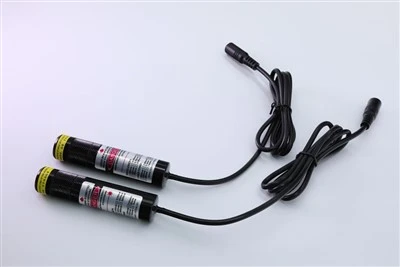
If you’re tired of dealing with wobbly, uneven lines that cause more problems than they solve, reach out. We supply uniform line laser modules built for everything from manufacturing and construction to metrology and medical devices, so we can match the right module to your specific needs. No guesswork, no jargon, just a solution that works for you.
Industrial Positioning Laser Modules References
- Optical Engineering Society. (2021). Homogenized Line Laser Modules for Industrial Alignment Applications. Proceedings of the SPIE Laser Technology and Applications Conference.
- National Institute of Standards and Technology (NIST). (2022). Precision Dimensional Metrology Using Uniform Illumination Lasers. NIST Technical Note 2056.
- Occupational Safety and Health Administration (OSHA). (2023). Laser Safety Guidelines for Industrial Workplaces. OSHA 3696-12R-2023.
- Industrial Laser Solutions Magazine. (2022). ROI Analysis of Uniform Line Lasers vs. Standard Line and Point Lasers in High-Volume Manufacturing. Issue 14, pp. 22-27.
Changshu Desheng Optics Electronics Co., Ltd.
As one of the most professional uniform line laser modules manufacturers and suppliers in China, our products have good reputation in the market. Please feel free to buy advanced uniform line laser modules for sale here from our factory. Good service and quality products are available.
Address: 8A, Yineng science and technology industrial park, No.183, Yinhe Road, Southeast Development Zone, Changshu, Jiangsu Province, China.
E-mail: desheng1@dershinelaser.com
WebSite: https://www.ds-lasers.com/
