If you’ve ever stared at a T shaped bulb and wondered why its light looks warmer or crisper than the rest in your light fixture, you’re not alone. As a T shaped bulbs supplier, I get this question all the time—from electricians updating office lighting to homeowners looking to swap out their old, flickering incandescents. It’s not just a random quirk; it’s tied to how these bulbs are built, and what they emit matters for both comfort and functionality. Let’s break it down, no jargon, just straight talk about light and the bulbs we make. T Shaped Bulbs

First, let’s start with a quick refresher: T shaped bulbs, sometimes called tubular LED bulbs, get their name from their shape—long, cylindrical, with a T-shaped base that fits into standard sockets. Unlike old incandescents, which glow when a filament heats up, these modern bulbs rely on light-emitting diodes, or LEDs, and in some cases, a fluorescent coating to tweak what comes out. That core design is why their light isn’t one-size-fits-all.
A lot of customers come to us asking, “What color will my T shaped bulb be when it’s on?” The short answer is: it depends on the color temperature we spec it with, but that color comes from two key parts of the bulb. The first is the LED chips themselves. Early LED chips were cool, almost blue, because that’s how diodes emit light naturally before being modified. If we left those blue chips uncovered, the bulb would look harsh, like a fluorescent light in a old classroom. So we add a phosphor coating to the inside of the tube—usually a mix of yellow and red phosphors. When the blue light from the chips hits that coating, the phosphors absorb some of the blue and emit longer, warmer wavelengths, mixing with the leftover blue to create the light we see.
Wait, let’s make that easier to picture. Wavelengths of light correspond to color on a spectrum: short wavelengths are blue or white, medium are green or yellow, long are orange or red. The color temperature, measured in Kelvin (K), tells us where a bulb falls on that spectrum. T shaped bulbs usually come in three main color temperature ranges, and each serves a different purpose. Let’s go through them, since that’s what most buyers actually care about.
First, 2700K to 3000K—warm white. This is the color you’d want for a living room or bedroom. It’s soft, not too bright, and has that warm, yellowish glow that makes spaces feel cozy, similar to old incandescent bulbs. For restaurants or boutique stores, this is our bestseller—customers say it makes their displays look inviting, like the lighting is welcoming, not harsh. When we make these bulbs, we use more red and yellow phosphors to cut down on the blue light, so the final mix leans into those longer wavelengths. I remember a café owner last quarter switched from their old fluorescent tubes to our 2700K T shaped bulbs; they told me customers stayed longer and commented that the food looked “warmer” on the plates. That’s exactly what this color is for.
Next, 3500K to 4100K—neutral white. This is the middle ground. It’s bright enough for task work, but not as harsh as cool white. We recommend neutral white for offices, kitchens, or garages. Why? It has a balance of blue and warm wavelengths, so you can see details clearly without straining your eyes. A teacher recently bought a batch for their classroom; they said the old fluorescents made whiteboards look washed out, but these bulbs made the writing crisp and easy to read for students. For T shaped bulbs, neutral white uses a slightly lower amount of red phosphor than warm white, so the mix hits that balanced sweet spot. It’s the most versatile color, really—works in most commercial spaces and even some home offices where you need both comfort and clarity.
Then there’s 5000K to 6500K—cool white, sometimes called daylight. This one is sharp, bright, with a blueish tint. We use these for places that need maximum visibility: warehouses, factory floors, art studios, or outdoor storage areas. Why? Cool white has shorter, bluer wavelengths that penetrate shadows and make edges more distinct. A construction company bought 5000K bulbs for their site last spring; they said workers could spot small tools on dark workbenches and avoid tripping over cords way easier than with their old bulbs. The phosphor mix here has very little red, so most of the light comes from the blue LED chips, giving it that crisp, almost daylight feel. It’s not a color you’d want for a bedroom, but it’s essential for spaces where visibility is key.
Now, a common misconception I hear a lot: people think all T shaped bulbs are “white light,” so they don’t realize they can pick different colors. We make it a point to explain this to every customer, because choosing the wrong color can make a space feel off. For example, someone who puts cool white bulbs in a bedroom might end up with trouble sleeping—studies show that too much blue light (which is heavy in cool bulbs) suppresses melatonin, the hormone that makes you tired. That’s why we always ask buyers what the bulb is for, not just what shape they need.
Wait, let’s talk about how that emission actually works in the tube, because it’s not just LEDs. Early T shaped bulbs were fluorescent, right? Those older models used a mercury vapor inside the tube that emits ultraviolet light, which then hits a phosphor coating to turn it into visible light. The color of those old fluorescent bulbs also depended on the phosphor mix—warm white fluorescents had more red phosphor, cool had more blue. Now, most T shaped bulbs we sell are LED, but we still carry some high-performance fluorescent options for customers who prefer them for certain industrial uses. But LED has taken over because it’s more energy efficient and lasts longer, which is a big win for businesses that don’t want to replace bulbs every year.
Another thing: some T shaped bulbs are dimmable, and that affects the color too. When you dim a standard bulb, the light gets warmer, right? With LED T shaped bulbs, that’s a little different. If you have a dimmable bulb made for residential use, dimming will still shift the color slightly toward warm, but not as much as an incandescent. Industrial dimmable bulbs are built differently, so their color stays more consistent at any brightness. We always tell customers if a bulb is dimmable, because that’s another factor in what the final light will look like.
I should also mention CRI—Color Rendering Index. That’s a number that tells you how accurately a bulb shows real colors compared to natural daylight. A CRI of 80 is standard for most T shaped bulbs, but we also make high CRI bulbs with a 90 or higher. These are great for art galleries, clothing stores, or design studios, where you need to see true colors. A clothing boutique owner once told me their old bulbs made a red dress look orange; when they switched to our 90 CRI neutral white T shaped bulbs, the red was exactly right. So CRI ties into what color the light emits, because a bulb with low CRI distorts colors, even if its temperature is correct.
As a T shaped bulbs supplier, we test every batch of bulbs for color consistency. You don’t want half the bulbs in a office being warm and half being cool— that creates a weird, uneven lighting. We use color spectrophotometers to measure the wavelength output of each bulb, so we can make sure every bulb is within 200K of the specified color temperature. That’s something a lot of smaller suppliers skip, but we know it matters for our customers.
Let me wrap this up for anyone still deciding what color they need. If you’re lighting a bedroom, living room, or restaurant patio, go for 2700K warm white. If it’s a kitchen, home office, or school classroom, 3500K neutral white is your sweet spot. For warehouses, garages, or art studios, 5000K cool white will give you the visibility you need. And if color accuracy is important, look for a CRI of 90 or higher.
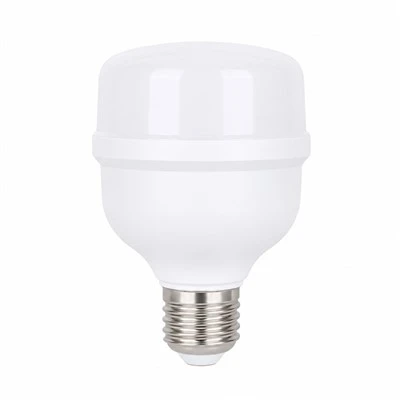
At the end of the day, the color of a T shaped bulb isn’t just a random feature—it’s designed for where you put it. If you’re still not sure which color is right for your space, or you want to ask about our custom color options, reach out to our team for a chat. We’re here to help you pick the right bulb, not just sell you one. Don’t hesitate to connect with us to discuss your project needs and get a quote.
T Shaped Bulbs References:
- "Light Emitting Diodes (LEDs) for General Illumination" – U.S. Department of Energy, 2022
- "Color Temperature and Color Rendering: Key Lighting Properties" – Illuminating Engineering Society, 2021
- "Tubular LED Bulb Design and Performance" – Lighting Research Center, Rensselaer Polytechnic Institute, 2020
- "Mercury-Containing Fluorescent Bulbs: Specifications and Applications" – Environmental Protection Agency, 2019
Hangzhou Lin’an Mingfeng Electric Parts Co., Ltd.
We are one of the most experienced t shaped bulbs manufacturers and suppliers in China since 1996. We warmly welcome you to wholesale customized t shaped bulbs made in China here from our factory. If you have any enquiry about pricelist and quotation, please feel free to email us.
Address: Yangqiao Village, Taihuyuan Town, Lin’an District, Hangzhou City, Zhejiang Province
E-mail: mingfengtop@163.com
WebSite: https://www.mingfengtop.com/
