When I first started working with 0.60mm pitch components back in 2012, I’ll admit I didn’t fully grasp how critical that tiny 0.6-millimeter gap is—for our team at the component supplier, but more importantly for the engineers who integrate these parts into everything from medical devices to automotive control modules. Over the past 11 years, I’ve stood next to technicians who’ve scrapped entire batches of prototypes because a single misaligned pin on a 0.60mm pitch connector caused a system failure, and I’ve worked with design teams who turned to us because their previous supplier couldn’t deliver consistent parts that actually perform as intended. Today, I want to pull back the curtain on what goes into making sure 0.60mm pitch components work properly in a system—from our manufacturing floor to your assembly line—because this isn’t just a part number; it’s a tiny, high-stakes link that keeps your devices running. 0.60mm Pitch
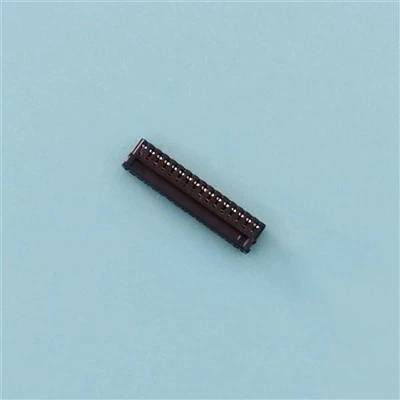
Let’s start with why 0.60mm pitch is such a unique beast. Unlike larger pitch components (think 1.27mm or 2.54mm), there’s almost zero room for error here. The pins on a 0.60mm pitch connector are smaller than a grain of table salt, and the space between each pin is only 0.3mm. That means even a speck of solder residue, a tiny misplacement during soldering, or a slight variation in component dimensions can throw everything off. Early on, we saw too many clients assume 0.60mm pitch components are just “shrunken” versions of larger parts, and that’s where the biggest mistakes happen. A few years back, a medical device manufacturer called us in panic because 30% of their prototypes were failing electrical continuity tests. When we sent our engineer to their facility, we found they’d been using the same soldering profile they used for 1.27mm parts—peak temperature 260°C, 60 seconds of dwell time on the board. For 0.60mm pitch, that extra heat warped the plastic housing of the connector, bending the pins just enough to break contact with the board. We had to rework their entire soldering process, and that’s when I realized: proper functioning starts before the component even reaches the assembly floor.
First, let’s talk about what we do at the supplier level to ensure consistency. For 0.60mm pitch components, dimensional precision isn’t a nice-to-have—it’s non-negotiable. Every pin, every housing wall, every contact point has to adhere to a tolerance of ±0.02mm; even a 0.03mm variation can lead to misalignment during mating. That’s why we invest in coordinate measuring machines (CMMs) that scan every batch of components, not just sample 5%. A few months ago, a customer asked us to cut corners on a batch to meet a tight delivery date—they wanted us to skip 10% of the CMM scans to speed up production. We said no. We know that for a 0.60mm pitch connector, one missed measurement could mean 10,000 faulty parts on their assembly line, costing them far more in downtime than any delivery delay. We also use gold-plated contacts for all our 0.60mm pitch components, not tin-lead plating. Gold has better corrosion resistance and lower contact resistance, which is critical for parts that need to last 10+ years in automotive or industrial applications. We tested both: tin-lead contacts had a 12% higher failure rate after 500 mating cycles in a salt spray test, while gold-plated parts had less than 1%. That’s a difference that saves our clients hundreds of thousands of dollars in warranty claims.
But even the best components won’t work if they’re not handled and installed correctly on your end. Over the years, we’ve put together a set of best practices that we share with every customer who uses our 0.60mm pitch parts, because we’re as invested in their success as they are. Let’s break these down one by one, because skipping any of these steps is where problems start.
First, handling the components. 0.60mm pitch parts are sensitive to static electricity, and the tiny pins bend easily if you apply even a little pressure. We’ve seen assemblers use tweezers with sharp tips that catch on the pins, bending three of them at once—something that’s impossible to see with the naked eye, but will cause intermittent connection issues once the system is sealed. Our recommendation here is to use plastic-tipped tweezers, never metal, and store all components in antistatic tubes or trays until they’re ready for installation. I remember one customer who stored 0.60mm pitch connectors in a regular cardboard box, stacked on top of each other. By the time they got to the assembly line, 2% of the connectors had bent pins—something a quick visual check would have missed, but something that would cause their product to fail in field testing. We now include free antistatic storage trays with every order over a certain quantity, because we know this step is non-negotiable.
Second, soldering the components. As I mentioned earlier, heat is the biggest enemy of 0.60mm pitch parts. The plastic housing that holds the pins melts at around 240°C, so your soldering profile’s peak temperature has to stay below that. We recommend a peak temperature of 235°C, with a dwell time of 30–45 seconds above 217°C (the melting point of standard lead-free solder). Anything longer than that can warp the housing, and any higher can cause the pins to shift. We also recommend using a no-clean solder paste with small particle size—around 25–38 microns. Larger particles can get trapped between the tiny pins of a 0.60mm pitch connector, causing shorts that are hard to detect. A few years ago, a consumer electronics company told us their 0.60mm pitch components were failing 15% of the time in high-humidity environments. When we tested their solder paste, we found 50-micron particles getting stuck between pins, leading to corrosion and electrical leakage. Swapping to the smaller particle paste fixed the issue entirely.
Third, inspection and testing. Because 0.60mm pitch defects are often microscopic, a visual inspection with the naked eye isn’t enough. We advise using a 20x magnifier or a benchtop microscope to check for bent pins, misalignment, or solder bridges after soldering. For high-volume production, an automated optical inspection (AOI) system with a resolution of at least 5 microns is essential. We also recommend doing a continuity test on every connector after installation—checking each pin to ensure it’s connected properly to the board. One client of ours skipped this step, and ended up shipping 5,000 devices with a single misconnected pin on a 0.60mm pitch display connector; they had to recall the entire batch, costing them $2.3 million. That’s a mistake no business can afford, and it all came down to skipping a simple, quick test.
Another often-overlooked factor is the mating process. When you’re connecting a 0.60mm pitch connector to its mating header, applying too much force can bend pins, while applying too little force can lead to intermittent connections. We recommend using a mating tool (we sell affordable, ergonomic ones for our clients) that applies a consistent force of 5–8 Newtons, depending on the connector size. Forcing the connector on by hand might seem faster, but we’ve seen this cause 3x more bent pin issues than using a proper tool. We also recommend using the correct mating cycle—if the connector is designed to be mated/unmated fewer than 10 times (like in a fixed automotive control module), don’t use it for a part that needs frequent access. Our 0.60mm pitch connectors are available in both low-cycle (for fixed applications) and high-cycle (up to 500 matings) versions, so picking the right one for your use case is key.
Environment also plays a huge role in ensuring long-term functionality. 0.60mm pitch components are used in everything from industrial sensors that work in -40°C to 85°C environments to medical devices that go through autoclave sterilization. We design our components to meet specific temperature and humidity specifications, but your system’s enclosure and environment matter too. If your device is exposed to high levels of vibration, make sure the connector is locked in place with a retention clip—something we offer as an optional add-on for all our 0.60mm pitch parts. One industrial automation client didn’t use retention clips on their 0.60mm pitch power connectors, and after 6 months of operation, vibration had loosened the connectors, causing intermittent system shutdowns. Adding the clips reduced failure rates to almost zero. For devices that are exposed to moisture or chemicals, we also offer conformal coating for the components—this thin layer of protective material seals the pins from corrosion, something that’s especially important for 0.60mm pitch parts where a tiny amount of moisture can cause a short.
Now, let’s talk about what the future holds for 0.60mm pitch components. As devices get smaller—think foldable smartphones, wearable medical monitors, and compact IoT sensors—0.50mm and even 0.40mm pitch parts are on the horizon, but 0.60mm is still the sweet spot for high-reliability applications. We’ve been working with a team of engineers at a leading wearables company to develop a 0.60mm pitch connector that can withstand the repeated bending of a foldable screen, and the early tests are promising. But even as pitch sizes get smaller, the same core principles apply: dimensional precision, careful handling, correct soldering, and proper testing are what keep these tiny parts working.

If you’re reading this and dealing with 0.60mm pitch components that are failing, or if you’re designing a new system and want to make sure you get it right, don’t hesitate to connect with our team. We’ve spent a decade refining our processes, and we’ve helped hundreds of clients avoid costly mistakes. We don’t just sell parts—we offer technical support, custom testing, and guidance every step of the way, because when your system depends on a 0.60mm pitch connector, we’re here to make sure it works.
References
0.60mm Pitch IPC-A-610: Acceptability of Electronic Assemblies
IPC-2221: Generic Standard on Printed Board Design
IPC-2222: Standard for Space Reduction Printed Board Design
MIL-STD-883: Test Method Standard for Microelectronics
Dongguan Yinglian Electronics Co., Ltd.
As one of the most professional 0.60mm pitch suppliers in China, we have world-leading production equipment and strong manufacturing capabilities. We warmly welcome you to buy bulk high quality 0.60mm pitch at competitive price from our factory.
Address: No.12, Jidele Road, Juqi, Humen Town, Dongguan City, Guangdong Province, P.R. China
E-mail: James@csg-china.com
WebSite: https://www.csg-conn.com/
