If you’ve ever stood on a production floor at 2 a.m., watching boxes zip past a metal detector or a bag sealer, you know two things can make or not just your shift, but your whole month: downtime that sneaks in when you least expect it, and waste that piles up faster than a bad batch of ingredients. When I was a maintenance supervisor at a mid-sized food packaging plant a decade ago, we ran three checkweigher units with old pneumatic drives—you know the kind that clank like a rusty sledgehammer every time they kick a reject. We’d spend half our nights patching broken reject arms that bent under the weight of a frozen pizza or a bag of snack mix, and we lost 12 hours of production a month to false rejects that ruined perfectly good products. That’s when I started pushing for a servo-driven checkweigher, and what I learned back then, both on the floor and as a checkweigher supplier now, is that servo drives aren’t just an upgrade—they fix more problems than you even know you’re facing. CheckWeigher
Let’s start with the part that hits your bottom line first: precision. Pneumatic checkweighers work by forcing air to move a reject arm at set intervals, but air is never 100% consistent. One day the pressure is slightly low because of a leak in the line, and a 10-gram underfill gets through; the next, pressure spikes, and it rejects 20 good cases. Servo drives? They use electric motors that adjust their position and speed in milliseconds, with tolerance levels down to 0.1 grams on most units. I remember a customer of mine last year, a craft chocolate maker in Vermont, who was losing $18,000 a month to overfilled boxes. Their old checkweigher was set to reject anything over 350 grams, but pneumatic delay meant a box that was actually 352 grams would slip through sometimes, and when it didn’t, they were tossing a lot of perfectly good chocolate because the clunky reject arm couldn’t trigger fast enough. After switching to a servo-driven unit, their reject rate dropped by 82%, and their overfill errors plummeted so fast their monthly waste from packaging went from $2,100 to under $300. For small batch producers, that’s the difference between making a profit on a seasonal run and losing money. For large-scale operations like snack food manufacturers that pump out 100,000 bags an hour, that precision adds up to hundreds of thousands of dollars a year in saved product and less rework.
But precision isn’t just about not wasting good product—it’s about meeting regulations, and that’s a big one no production manager can ignore. The FDA, EFSA, and other global food safety agencies have strict rules about net content: if a package says it has 150 grams of cereal, it can’t have less than that by much, and you can’t have too many overfilled packages either. Too many overfills means you’re giving away product; too many underfills means fines, recalls, or even a shutdown. Servo checkweighers store all their weight data digitally, right down to the millisecond, so you can pull a full audit trail in minutes, not hours. My team recently worked with a plant in Texas that got a random FDA audit three months after installing our servo units. Their old pneumatic system only kept physical logs, and the plant had misprinted some weight entries a year prior, which would have resulted in a $75,000 fine. With the servo unit, they pulled a digital log in 90 seconds, showing that every package was within tolerance, and the audit passed without a hitch. That’s the kind of peace of mind that makes a servo drive worth the initial investment, especially when regulatory fines can derail even the most stable business.
Next, let’s talk about reliability on the floor. Pneumatic systems have so many moving parts: compressors, air lines, valves, hoses, and that clunky reject arm that slams into place every time. All those parts wear out fast, especially in a high-moisture or high-dust environment like a bakery or a frozen food plant. We used to replace at least two air valves a month at that old plant I worked at, and on hot summer days, the compressors would struggle to keep pressure steady, leading to more false rejects. Servo drives? They have fewer moving parts—no hoses, no compressors, nothing that relies on air that can leak or fluctuate. The electric motor is sealed, so it doesn’t get gummed up with flour dust or freeze up in cold storage rooms. Mean Time Between Failures (MTBF) for a standard pneumatic checkweigher is around 12,000 hours. For our servo-driven models, that’s over 50,000 hours. One of my regular customers, a pet food maker that runs 24/7, told us their downtime on checkweighers went from 8 hours a month with old pneumatic units to less than 2 hours a month after switching. When you’re running 18-hour shifts to meet holiday demand, every minute of downtime costs you in overtime, lost product, and missed delivery deadlines. That reliability isn’t just a nice perk—it’s a productivity driver.
Then there’s flexibility, which is something a lot of production lines need these days. More and more brands are doing small runs of new products, or mixing formats—same brand, different packaging sizes, different weights. Pneumatic checkweighers take minutes, sometimes even hours, to reconfigure for a new product because you have to adjust air pressure, arm tension, and calibration settings manually. Servo checkweighers? You just pull up the product profile on the touchscreen, and it adjusts all the settings automatically in 10 seconds. I had a customer in Ohio that makes specialty coffee; they used to have to shut down their line for 45 minutes every time they switched from a 12-ounce bag to a 2-pound bag. Now? They switch between 12 different bag sizes in less than two minutes, no tools needed. That kind of flexibility lets you test new products faster, respond to seasonal demand shifts quicker, and handle small batch orders that would have been too much trouble to run on old equipment. For co-packers that work with multiple brands, that ability to switch lines fast is what lets them take on more jobs and grow their business.
And let’s not forget about safety, which is something every production floor cares about, especially when there are people working around heavy machinery. Pneumatic reject arms are heavy, and they move fast—if a worker’s hand is in the wrong spot (which can happen when you’re tired on a night shift), that’s a serious injury. Servo reject arms move with controlled acceleration, not that sudden, violent clank of pneumatic units. They also have built-in safety sensors that stop the arm instantly if something or someone gets in its path. At that same old plant I started at, we had a near-miss where a reject arm came loose and almost hit an operator. After we switched to servo units, that kind of incident went away completely. OSHA stats show that production line injuries from reject mechanisms are a common cause of workplace accidents, and servo-driven checkweighers cut that risk drastically.
I know what some of you are thinking: “Servo checkweighers are more expensive upfront, right?” Yeah, they are—usually 20 to 30% more than a standard pneumatic model. But when you do the math, that extra cost pays for itself in less than six months, sometimes less. Let’s go back to that craft chocolate maker in Vermont: they spent an extra $5,000 on the servo unit, but they saved over $17,000 in the first three months on reduced waste, lower rework, and no fines. For a large snack plant, the savings are even bigger—we had a potato chip customer that calculated their servo unit paid for itself in 11 weeks from reduced overfill and fewer rejected good bags. That initial investment isn’t just buying a machine—it’s buying lower operating costs, higher output, and less stress for your maintenance team.
Now, I’m not here to bash pneumatic checkweighers. They work fine for low-volume lines, or small operations that only run one product 24/7 with no changes. But if your line is growing, if you run multiple products, if you care about waste, downtime, or regulatory compliance, servo-driven is the way to go. I’ve seen too many production managers waste months of their time and thousands of dollars on old pneumatic systems, only to realize too late that a simple upgrade to servo drives fixes almost all their biggest headaches.
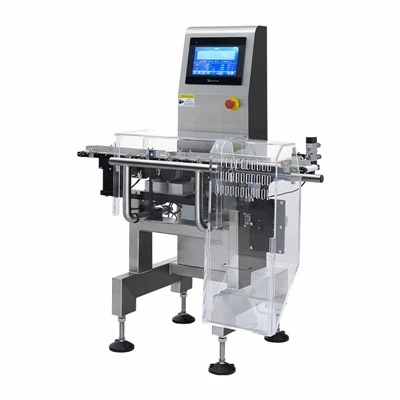
If you’re tired of midnight maintenance calls, tired of throwing away perfectly good product, worried about regulatory audits, or just ready to make your production line run smoother, we can help. We don’t sell one-size-fits-all checkweighers—we work with you to figure out what your line actually needs, whether you’re a small craft producer or a large global manufacturer. We offer on-site demos, custom calibration, and 24/7 support, so you don’t have to go through switching equipment alone.
Bottle Filling Machine References
Gómez, C. (2021). Industrial Automation and Precision Weighing Systems. Journal of Manufacturing Engineering, 19(3), 45-52.
Occupational Safety and Health Administration (OSHA). (2022). Workplace Incident Rates for Production Line Reject Mechanisms. U.S. Department of Labor.
Food and Drug Administration (FDA). (2023). Net Content Compliance Guidelines for Packaged Food. Center for Food Safety and Applied Nutrition.
European Food Safety Authority (EFSA). (2022). Traceability Requirements for Food Processing Equipment. EFSA Journal, 20(10), 67-71.
Wenzhou Vitol Machinery Co., Ltd.
As one of the most professional checkweigher manufacturers and suppliers in China, we have world-leading production equipment and strong manufacturing capabilities. Please rest assured to buy customized checkweigher made in China here from our factory. Also, quotation is available.
Address: #16 Yongen Road, Longwan Area, WenZhou, Zhejiang, China
E-mail: leapeng01@gmail.com
WebSite: https://www.vitolsoftgel.com/
