If you’ve ever relied on a leak detector to spot a hidden pipe crack in a commercial HVAC system, a refrigeration unit at a grocery store, or even a critical industrial pipeline, you know how these tools can save time, money, and prevent catastrophic failures. As a supplier of leak detection equipment, I spend a lot of time talking to technicians, facility managers, and plant operators who assume these devices are perfect—like a pair of industrial X-ray glasses that can find any tiny escape of gas or liquid. But over the years, I’ve learned to be clear with customers: leak detectors have real, hard limitations, and ignoring them can lead to missed leaks, unnecessary repairs, and wasted resources. Let’s break down the most common limitations we see day to day, so you can use your leak detector more effectively and avoid costly missteps. Leak Detector

First, and probably the most fundamental, is sensitivity calibration. A leak detector is only as good as its last calibration, and even the highest-end models can drift over time. I worked with a food processing plant last year that installed a new generation of refrigerant leak detectors in their cold storage rooms, only to have one go three months without a calibration. When their maintenance team finally ran a manual check with a reference leak standard, the detector was missing leaks that were releasing at a rate of just 0.5 ounces per year—well within the device’s rated sensitivity. Drift happens because of temperature fluctuations, dust buildup on internal sensors, and even small changes to the detector’s internal electronics over time. We see this most often in detectors that are stored in harsh environments, like outdoor pump houses or dusty manufacturing floors, where temperatures swing 20 degrees or more daily. Even a semi-portable leak detector used for on-site pipeline inspections can drift if left running for 12+ hours straight without a calibration check. That’s not a flaw in the detector itself, but a user limitation: not everyone schedules regular calibrations, or uses the right calibration gas to verify performance. Many operators rely on the detector’s built-in “ready” light, but that only confirms it’s powered on—not that it’s detecting leaks accurately.
Next, leak detectors are limited by the type of leak they can and can’t detect, especially when it comes to leak geometry and location. Think about it: most leak detectors work by pulling in air (or the fluid being tested, like refrigerant) over a sensor, then measuring changes in concentration. That means a leak has to be accessible to the detector’s sampling probe, or it has to release enough of the test fluid into the surrounding air to be picked up. For example, a pinhole leak buried 10 feet deep in an underground water line, covered in soil and packed gravel, will release very little vapor into the air—most of the fluid seeps into the ground before it can reach a sampling point. A surface-mounted leak, like a crack in a thin copper pipe, is easy; a leak in a thick-walled steel pipeline, where vapor has to diffuse through the metal and insulation, is much harder. We also see issues with “subsurface leaks” in industrial settings: leaks of hazardous gases that seep into wall cavities or under concrete, where the detector can’t reach. Some newer units use ultrasonic technology, which listens for the high-frequency sound of escaping gas, but even that has limits—if the leak is inside a sealed, sound-dampening tank, the ultrasonic waves won’t escape to be picked up. I remember a chemical plant that spent two days scanning their storage tanks with an ultrasonic leak detector, only to find the leak was in a welded seam on the underside of the tank, too low and surrounded by other equipment for the probe to pick up the sound waves. They had to drain part of the tank to inspect manually, because the detector couldn’t get a clear line of sight to the leak.
Another big limitation is cross-sensitivity, which is when the detector reacts to something that isn’t the target fluid. For refrigerant detectors, for example, many older models will pick up propane, butane, even some cleaning chemicals like methylene chloride, as false positives. We had a customer in the restaurant industry recently who was using his leak detector to check for refrigerant leaks in his walk-in coolers, and the detector kept beeping near the store’s soda fountain machine. Turns out, the carbonation machine’s CO2 regulator was leaking a tiny amount of CO2, which the refrigerant detector misidentified as R-134a. He spent three hours checking every pipe in his coolers, only to find out it was a false alarm from the soda system. For industrial leak detectors that test for volatile organic compounds (VOCs), the problem is even worse: common substances like paint fumes, diesel exhaust, even perfumes on a technician’s hands can trigger an alert. Some newer units have algorithms to filter out non-target substances, but those settings are often disabled by users who forget to adjust them for their specific environment. Cross-sensitivity can also lead to missed leaks: if a technician is distracted by a false alert from a cleaning spray, they might miss a real leak that’s releasing at a lower concentration. We always tell customers to test in a “clean” area first, away from any potential contaminants, to establish a baseline for their detector before starting a scan.
Environmental conditions also play a huge role in how well a leak detector works, and these conditions can become severe enough to render the device nearly useless. Humidity is a big one for many sensor types: catalytic bead sensors, which are common for detecting combustible gases, can be poisoned or skewed by high humidity, causing the detector to read higher or lower than actual concentration. I once worked with a wastewater treatment plant that was scanning for methane leaks in their anaerobic digesters during a rainstorm. The humidity was over 90%, and their detector started giving erratic readings—sometimes beeping at full scale for no reason, sometimes not alerting to a clear leak that was releasing at 10% LEL (Lower Explosive Limit). We had them wait until the humidity dropped, and the detector worked perfectly after that. Wind is another factor: if you’re scanning outdoors on a gusty day, wind can dilute the leak vapor so much that it never reaches the detector’s probe. A leak that would be easily detected on a calm day might be undetectable if wind is blowing it away before it reaches the sensor. Temperature also matters: most detectors are calibrated to work between 32°F and 100°F, and extreme cold (like in a freezer warehouse) or extreme heat (near a furnace or industrial oven) can damage the sensor or cause it to drift. We had a customer who tried to use a general-purpose leak detector in a refrigerated truck at -20°F; the sensor froze, and he ended up missing a 2-ounce per year refrigerant leak that caused a breakdown on the highway.
Then there’s the limitation of throughput and speed, especially for large-scale scanning. A lot of people think a leak detector can cover an entire facility in an hour, but that’s not the case. Most sampling-type leak detectors require you to move the probe slowly, an inch or two per second, to ensure you’re drawing in enough air to detect a leak. If a technician is moving the probe too fast, they might miss a small, fast-releasing leak. For a facility with 100 miles of piping, that means scanning each line carefully would take days—something most operations can’t afford to shut down for. Even newer sniffer-style detectors, which use pumps to pull large volumes of air, can only process so much air before the sensor is overwhelmed, leading to missed small leaks. Compare that to a fixed leak detector, which is installed in a single location to monitor 24/7, but those are limited to just that one area. There’s no one-size-fits-all for speed and accuracy, and many users prioritize speed, leading to more missed leaks. I always advise customers to split large scanning jobs into smaller sections, assign one technician to each section, and give them enough time to scan carefully—even if it means an extra hour of work, it’s better than a catastrophic leak later.
It’s also important to address the limitation of training. A leak detector is a tool, and like any tool, it only works as well as the person using it. We see this all the time: a technician buys a top-of-the-line leak detector, reads the manual once, and then relies on their “intuition” to interpret readings. For example, many detectors give a numerical readout of concentration, but some technicians only look for an alert light, not the actual number. A leak reading of 10 parts per million might be a small, insignificant leak, but a reading of 100 parts per million is a critical one—if you don’t know how to read the display, you might miss that difference. Some detectors also have different modes: “high sensitivity” for small leaks, “fast scan” for large leaks, and “hold” mode to capture readings in hard-to-reach areas. If a technician forgets to switch modes, they might use the wrong one for the job. We offer free training for all our customers, because even the best detector can be rendered useless by someone who doesn’t know how to use it correctly. I’ve had customers call us frustrated, saying their detector “doesn’t work,” only to find out the technician was holding the probe too far away from the leak, or had the calibration gas bottle connected backwards.
Now, I don’t want this to sound like we’re bashing leak detectors—far from it. We’re in the business of making these tools as reliable as possible, because we know they’re essential for preventing leaks, saving energy, and keeping people safe. But understanding their limitations is the first step to using them effectively. The key is to pair your detector with best practices: schedule regular calibrations, test in clean environments to avoid false positives, account for environmental conditions like humidity and wind, and train your team to read the detector correctly. If you’re not sure where your detector is falling short, or you’re looking to upgrade to a model that works better for your specific application, we’re here to help. We don’t push generic solutions—we work with you to assess your facility, your leak detection needs, and the limitations you’re currently facing, to find the right tools and support to get the job done right.
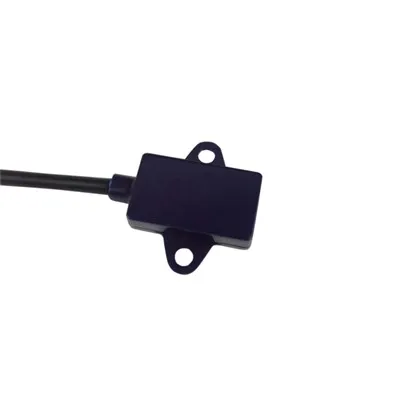
If you’re tired of missed leaks, false alerts, or detectors that don’t perform in your environment, we’re ready to discuss your needs. We can walk through your current setup, share insights on how to overcome common limitations, and help you select the right leak detection equipment for your operations.
Float Level Sensor References
- ASHRAE Guideline 15-2020: Refrigeration System Leak Detection and Maintenance
- National Fire Protection Association (NFPA) 326: Standard for the Safeguarding of Flammable Liquids and Gases
- International Organization for Standardization (ISO) 14971: Medical Devices – Application of Risk Management to Medical Devices
- EPA Method 21: Determination of Volatile Organic Compound Leaks
- Industrial leak detection equipment user manuals and performance data sheets, 2022–2024 product lines
Shenzhen Fineherc Technology Co., Ltd.
As one of the most experienced leak detector suppliers in China, we’re featured by quality products and low price. Please feel free to buy discount leak detector made in China here from our factory. Welcome to view our website for more information.
Address: 5th Floor, Building D, No. 39, Keji East Road, Torch Development Zone, Zhongshan City,China
E-mail: fineherc@hotmail.com
WebSite: https://www.fineherc.com/
