Hey everyone, Paper Labels
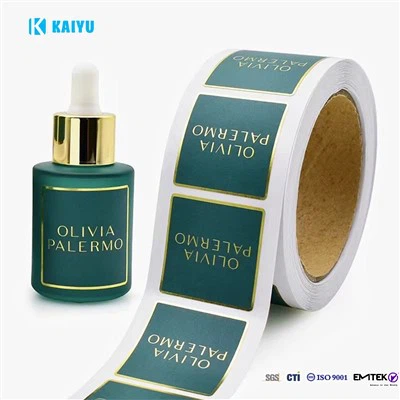
If you’re a small brand owner, packaging supervisor, or just someone who’s been struggling with paper labels that keep getting flagged for non-compliance, I get it. As a paper labels supplier, I’ve spent the last few years fielding calls from folks panicking because their labels got rejected at customs, or a retail partner sent them back with a note saying “doesn’t meet our standards.” It’s not just annoying—it can derail a launch, hurt your cash flow, and even damage your brand’s reputation.
I’ve had guys come to me with labels they printed themselves on a home inkjet, thinking they’d save a buck, only to find out they missed a tiny detail about adhesive strength or ingredient labeling. Others have brought in designs that looked great, but didn’t align with the industry specs for things like moisture resistance, especially if they’re shipping to places with humid climates. So today, I’m breaking down what I’ve learned—no stuffy jargon, just real, actionable steps to make sure your paper labels actually check all the boxes.
First off, let’s talk about what “compliance” even means here. It’s not a one-size-fits-all thing. You’ve got industry standards from organizations like ASTM International (that’s the American Society for Testing and Materials, for anyone who hasn’t googled it yet), plus regulatory stuff like the FDA for food and beverage, EU REACH for chemicals, and even retail-specific rules from stores like Walmart or Target. I can’t tell you how many times a client has said, “But my friend uses these labels and they’re fine!” Only to find out their friend only sells locally, not across state lines or internationally. So your first move? Figure out exactly which standards apply to your product. If you’re selling skincare in the U.S., that’s FDA’s labeling requirements. If you’re sending electronics parts to the EU, you’ve got to follow REACH’s substance limits. If it’s retail, ask the buyer straight up—most will send you a quick sheet of their label specs if you just pick up the phone and ask. I even keep a folder on my work laptop with common specs for clients because I know how much time it saves them.
Now, let’s dive into the actual paper label stuff. The label stock is huge here, and I see so many people skip over it. A lot of folks grab whatever cheap paper is at the office supply store, but that’s a mistake. For example, if you’re selling a jar of pickles that’s stored in a fridge or shipped in a hot truck, you need a paper label with a water-resistant coating. Basic uncoated paper will smudge when it gets wet, and if the adhesive fails, your label falls off—meaning you could get fined for mislabeling. I’ve had a client who sold artisanal jams; they initially used regular matte paper, and after a week of shipping, half the labels were peeling off. They switched to our coated paper with a permanent acrylic adhesive, and suddenly, no more complaints. That’s not just a “nice to have”—that’s compliance. If your label comes off, you’re not providing the required info (like ingredients or country of origin), which is a big no for the FDA.
Another thing with paper stock: thickness. Some standards require a minimum basis weight—usually between 60 and 80 lbs, depending on the use. Too thin, and the label tears when you’re applying it, especially if you’re hand-sticking it to oddly shaped containers like wine bottles or mason jars. We always tell clients, “If you can bend the label and see through it, it’s probably too thin.” Not only does that hurt your brand’s look, but if the label tears mid-transit, you’re back to that compliance problem of missing info.
Next up, adhesives. This is where a lot of suppliers cut corners, and it shows. Adhesives have to meet different standards too—for example, FDA-approved adhesives are non-negotiable for food contact. I once had a client bring in a batch of labels they got from a overseas supplier; the adhesive was strong, but not food-safe, so they had to throw out 5,000 labels. That cost them thousands and delayed their launch. Now, we make sure every adhesive we use is certified for the specific product type—no exceptions. Also, adhesive strength has to be just right: too weak, and it peels off; too strong, and when you want to remove it (like for a product take-back or recycling), it tears the paper off the container. Some retail brands require labels that are removable for recycling, so we tailor the adhesive to that. Again, it’s all about matching the adhesive to your end use and the standards you’re following.
Then there’s the content on the label—duh, right? But I can’t tell you how many times I’ve seen a label missing a required element. Let’s start with regulatory basics: for food, you need ingredients in descending order of weight, nutrition facts (for most products), a lot statement, and country of origin. For cosmetics, the FDA (again) requires ingredient lists, net weight, and manufacturer info. For any product sold in the EU, you have to have the label in the local language(s) of the country you’re selling in—no Google Translate shortcuts, either. I once worked with a small brand that sold candles to France; they used a translation from Google that messed up the wax ingredient name, and customs flagged the labels. We had to reprint them, which cost extra and made them miss a holiday sale. Moral of the story: double, triple check the text. If you’re not sure, hire a local translator or a compliance consultant— it’s way cheaper than reprinting a batch.
Another content thing: legibility. Standards usually say text has to be at least 6pt, but I’ve seen labels with tiny font that’s impossible to read from arm’s length. That’s not just a complaint—it’s non-compliance. For example, the FTC requires nutrition facts labels to have a certain font size for key info. If your text is too small, inspectors will mark you down. We always advise clients to do a “test” hold the label at the distance a customer would when picking up a product on a shelf—if you can’t read it easily, make the font bigger. Simple as that.
Now, testing. This is the part most small brands skip, but it’s make-or-break. You can print a label that looks great, but until you test it under real conditions, you don’t know if it’s compliant. We offer free sample testing for clients: we stick the labels to different containers (glass, plastic, metal), leave them in a fridge, put them in a hot car, spray them with water, even scrape them to see if the ink smudges. If the ink runs, we switch to a UV-cured ink that’s water-resistant. If the label peels after a week in the fridge, we tweak the adhesive. I had a client who sold dog treats, and they were shipping to Alaska in winter; their initial labels were peeling in the cold, so we switched to a cold-temperature adhesive. That small test saved them from losing a bunch of shipments. If you’re not working with a supplier that offers testing, do it yourself: get a sample, test it in your storage space, maybe even send a test batch to a few customers to get feedback. It’s way better than finding out the hard way.
Wait, let’s talk about environmental standards too, because that’s a big one now. A lot of industries (especially retail and international) require labels to be recyclable or compostable, or to not contain harmful substances like PVC. If you’re using a paper label that’s coated with a non-recyclable material, that could be non-compliant. I’ve had clients in the coffee industry switch to our compostable paper labels because Starbucks requires all their packaging to be compostable. We make sure all our paper stocks are FSC-certified, which means they come from responsibly managed forests—something a lot of big brands now require. If you’re selling to brands that market themselves as sustainable, that’s non-negotiable. Don’t just assume any paper label is eco-friendly; ask your supplier for certifications, and make sure they match the standards your buyers have.
Now, common mistakes I see all the time, so you can avoid them. First, waiting until the last minute to check compliance. A lot of brands design their labels, print them, then realize they missed something—like a required warning for a cleaning product. That’s a waste of time and money. Second, not communicating with your supplier. I can’t stress this enough. If you say, “I’m selling food in the U.S., so you need to use FDA-approved adhesive and ink,” that’s way better than the supplier guessing. We can’t read your mind, right? If you have specific specs from your retail partner, send them to us. Third, using generic labels. Pre-made labels from a big box store might work for a homemade product sold at a local farmers market, but if you’re scaling up, you need custom labels that meet the right standards. Generic labels rarely have the right adhesives or coatings for shipping long distances.
Let me give you a quick example of a client who got it right. A small skincare brand came to me last year; they were launching a line in the U.S. and Canada, so they needed to meet both FDA and Health Canada standards. They sent me their design, but I noticed they were missing the net weight in both languages (English and French) for the Canadian market. We told them, they adjusted the design, we used our FSC-certified paper with FDA-approved adhesive, and we did a test where we left the labels in a hot truck for 10 days—no peeling, no smudging. They launched successfully, no issues at customs, and now they’re reordering every month. That’s the kind of outcome we aim for.
So, what’s the bottom line? Making compliant paper labels isn’t rocket science, but it does require attention to detail and communication. Start by figuring out which standards apply to your product and where you’re selling. Pick the right paper stock, adhesive, and ink. Make sure all required info is clear and correct. Test your labels under real conditions. And work with a supplier that knows what they’re doing.

If you’re in the market for paper labels and want to make sure they’re compliant, just reach out. We can walk you through the specs, send free samples, and help you avoid those costly mistakes I talked about. Don’t wait until your labels get rejected—let’s get it right the first time.
Packaging Labels Reference
- American Society for Testing and Materials (ASTM). Standard Specification for Pressure-Sensitive Labels.
- U.S. Food and Drug Administration (FDA). Labeling Requirements for Food and Cosmetic Products.
- European Chemicals Agency (ECHA). REACH Regulation on Substances of Concern.
- Sustainable Forestry Initiative (SFI). Certification Standards for Paper Products.
Huizhou Yufeng New Materials Co., Ltd.
Huizhou Yufeng New Materials Co., Ltd. is one of the most experienced paper labels manufacturers and suppliers in China, featured by quality products and good price. Please feel free to wholesale durable paper labels for sale here and get pricelist from our factory. We also accept customized orders.
Address: 9th Floor, Building A9, Zhongchuang Yingke New Generation Industrial Park, Tonghu Town, Huicheng District, Huizhou City
E-mail: liangjun@kaiyudianzi.com
WebSite: https://www.yufengstickers.com/
