If you’ve ever walked through a grocery store’s backroom at 5 a.m., you’ve likely seen a Daily Product Boxing Machine (DPBM) humming along, stacking cereal boxes, snack bars, or cleaning supplies into neat cases in a fraction of the time a team of workers could. For small to mid-sized brands that are scaling up—think a line of artisanal granola bars or eco-friendly dish soap—this equipment can feel like a game-changer, but a common question keeps popping up in our inbox, at trade shows, and in vendor calls: Does a daily product boxing machine require special training to operate? As a supplier who’s walked customers through every step of setting up and running these machines over the last 12 years, the short answer is: not the kind of intense, certification-heavy training you might associate with industrial robotics, but structured, role-specific learning that’s non-negotiable for consistent, safe, and cost-effective operation. Let’s break this down, from what training actually covers to why skipping it isn’t worth the risk. Daily Product Boxing Machine
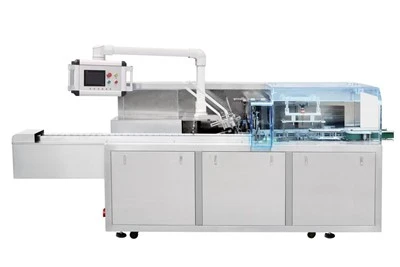
First, let’s set realistic expectations. DPBMs are not the same as large-scale industrial packaging lines that handle 100+ products per minute and require specialized engineering backgrounds to tweak. Most modern daily product boxing machines are designed for versatility—they handle between 10 and 30 cases per minute, adjust for different product sizes (you can switch from a 8-ounce granola pouch to a 12-ounce cereal box in 15 minutes or less), and integrate with standard conveyors or labelers. That accessibility is intentional; we built them for small and mid-sized manufacturers that don’t have a dedicated engineering team on staff. But “user-friendly” doesn’t mean “anyone can press a button and go.”
The core of DPBM operation training, in our experience, falls into three categories: safety protocols, routine setup and adjustments, and basic troubleshooting. Let’s start with safety, because this is the part we never cut corners on, and it’s the only part that feels like “specialized” training. Unlike a desktop stapler, a DPBM has moving parts—conveyor belts, clamping mechanisms, and case sealers—that can cause serious injury if misused. For example, the infeed belt that pulls product into the machine has a safety guard that locks if it detects an obstruction, but a lot of new operators will try to bypass that guard to speed up production. Our trainers spend the first three hours of on-site training walking operators through lockout-tagout (LOTO) procedures: the step-by-step process of turning off the machine, unplugging it, and securing the power switch before adjusting any internal parts. We also cover what we call “near-miss recognition”—how to spot frayed conveyor belts, loose clamping screws, or misaligned product before they cause a jam or a safety incident. Last year, we had a customer who skipped the full safety training and tried to reach into the machine to clear a stuck snack bar without locking it out; that resulted in a cut hand that shut down production for two weeks while they hired a temp worker to do their boxing manually. That’s a $15,000 mistake, all because they thought safety was “common sense” rather than part of specialized training.
Next, routine setup and product adjustments. This is where the “daily product” part of the machine makes training non-negotiable, even for operators with basic mechanical skills. Let’s say you run a small batch of 1,000 10-ounce organic snack bars on Monday, then switch to 500 14-ounce bars on Tuesday, then to 8-ounce cookie packs on Wednesday. Each time you change product, you have to adjust the machine’s clamping guides, the case size settings, and the infeed speed to match. A lot of new operators will try to guess these settings, but misalignment here leads to jams, wasted product, and even damaged boxes that can’t be sold. For example, if the clamping guides are set too tight for a thin snack pouch, they’ll crumple the top of the pouch, making it impossible to seal. If they’re set too loose, the product will shift during boxing, and the case will be uneven, which can cause issues when pallets are stacked. Our setup training is hands-on: we spend four hours having operators practice switching between 5 different product types, timed to match the 15-minute average switch time, so they’re comfortable doing it without supervision. A common misconception here is that setup is only for the technician—no, for a daily product machine, the operator who runs the line every day is the one who needs to know how to adjust it, because they’re the first to notice if something feels off.
Then there’s basic troubleshooting, which is the part that separates a machine that runs 98% uptime from one that’s stuck half the day. Jams are the most common issue with DPBMs, and they happen to even the best operators. The key is knowing how to clear a jam without causing further damage to the machine or the product. For example, a product jam in the infeed can be cleared by reaching in, but only after locking out the power, and only using the plastic pry bars we include in the machine’s tool kit—operators who use metal screwdrivers can scratch the conveyor belt or bend the clamping arms, leading to more frequent jams down the line. Our troubleshooting training covers the 10 most common issues we see, and gives operators a quick-reference checklist to follow: “Is the product too tall? Is the conveyor belt misaligned? Is the case sealer tape loaded correctly?” We also give them access to a 24/7 support line that our team mans, but the goal is that they can fix minor issues on their own without waiting for a technician.
Now, let’s address the flip side: what if you just skip this training entirely? We’ve had customers try that, usually to save time or money, and the results are almost never good. Last quarter, we had a craft syrup brand that purchased a used DPBM from another supplier and skipped any formal training, thinking they could “figure it out.” Within a week, they had 17 jams, 3 damaged cases, and their uptime dropped to 50%. They ended up calling us to send a trainer, and by the end of the day, their uptime was back to 90%, and they’d reduced jams by 80%. The trainer time cost them $1,200, but the lost production from skipping training was over $12,000 in revenue they could have made by boxing more syrup cases. That’s a big number, but it’s not just about lost revenue—there’s also the cost of product waste. For food and beverage brands, damaged product means you can’t sell it, and if it’s organic or has a short shelf life, that waste is even more costly.
But here’s the good news: the training for a daily product boxing machine isn’t nearly as intensive as you might think, and it’s designed to fit into the way small and mid-sized businesses operate. We offer two types of training: on-site training at your facility, where our trainer works with your operators for 8 hours over one day, and virtual training for teams that are spread out or can’t take time off the production line. Our virtual training uses live sessions with hands-on demos, so operators can ask questions in real time, and we follow up with a 30-day support check-in to make sure everyone is comfortable. We also include a 100-page operator’s manual that’s written in plain language, no jargon, with step-by-step photos for every setup and troubleshooting task—no engineering degree required to follow it.
A common question we get is: “Can I train my existing production line workers, who have experience with other packaging equipment, on my own?” The short answer is yes, but only if you follow the same structured curriculum we provide. We’ve seen customers who have their own tech-savvy workers go through our manual and pick it up in a week, but those who just have workers “figure it out” on their own run into issues. The problem is that packaging equipment, even small daily product boxing machines, has subtle differences that generic training (like a 2-hour YouTube video) doesn’t cover. For example, the clamping mechanism on our machine uses a spring-loaded release that has a specific pressure setting—too low, and the product shifts; too high, and it crushes. A YouTube video might tell you to adjust the clamps, but it won’t tell you the exact number of turns to make on the adjustment screw, which is the kind of detail that comes from real, hands-on training.
Another point to consider: compliance. If you’re packaging food, pharmaceutical, or personal care products, you have to meet industry safety and labeling regulations. A misaligned boxing machine can lead to uneven case seals, which can cause product contamination or improper labeling, leading to fines or recalls. The training covers how to set the machine to ensure consistent seal strength and product placement, which helps you stay compliant without extra work. We’ve had a few food brands tell us that after training, their FDA audits went smoother, because their boxing process was consistent and documented—something that would have been hard to prove if they were just guessing on setup.
Let’s also talk about the long-term benefit of proper training. When operators are trained well, they’re more likely to spot small issues before they become big problems. For example, an operator who knows how to check conveyor belt tension will tighten it before it slips, preventing a 2-hour jam that would take a technician to fix. We’ve seen customers who use our training have a 20% lower maintenance cost per year than those who don’t, because their operators are proactive rather than reactive. That adds up: over a 5-year lifespan of a DPBM, that’s tens of thousands of dollars in savings, not to mention less downtime.
I want to be clear that I’m not here to sell you on training just for the sake of it. We run a business, and our revenue comes from selling and supporting DPBMs, but our reputation is built on customers who run their machines well. We’ve had customers who skipped training when they first bought their machine, regretted it, and came back to us for training a few months later. The most successful customers are the ones who prioritize training from day one, before they even turn the machine on.
So, to circle back to the original question: Does a daily product boxing machine require special training to operate? It requires structured, hands-on training that’s tailored to the machine’s specific functions, safety protocols, and your product line. It’s not the same as training for a heavy industrial robot or a packaging line that runs 24/7 with 50 operators, but it’s also not something you can learn from a 20-minute video or by watching someone else work. The good news is that this training is accessible, affordable, and designed for the exact kind of small to mid-sized brands that use daily product boxing machines.
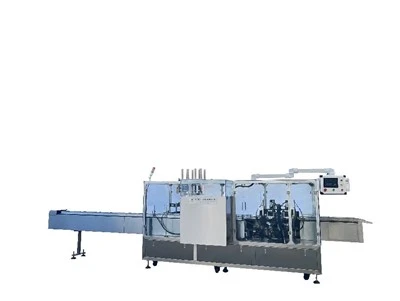
If you’re in the market for a DPBM, or you already have one and want to make sure your team is operating it safely and efficiently, we’re here to help. Our team can walk you through training options tailored to your facility, your product line, and your team’s schedule. Connect with us to discuss your needs, and we’ll make sure you have all the tools and knowledge to get the most out of your daily product boxing machine.
Daily Product Boxing Machine References
- Packaging Machinery Association. (2022). Best Practices for Operator Training in Small and Mid-Sized Packaging Operations.
- Occupational Safety and Health Administration (OSHA). (2021). Lockout-Tagout Procedures for Mobile Packaging Equipment.
- Food and Drug Administration (FDA). (2023). Current Good Manufacturing Practices (cGMP) for Packaging and Labeling of Food Products.
- Modern Materials Handling. (2022). Reducing Downtime in Daily Product Boxing: The Role of Operator Training.
Zhejiang Tuoyu Packaging Machinery Co., Ltd.
Zhejiang Tuoyu Packaging Machinery Co., Ltd. is one of the most professional daily product boxing machine manufacturers and suppliers in China. With abundant experience, we warmly welcome you to wholesale durable daily product boxing machine made in China here from our factory. Good service and quality products are available.
Address: Workshop No.12, No.11-19, Xinbin Road, Binhai New Area, Pingyang County, Wenzhou City
E-mail: 15868789201@163.com
WebSite: https://www.tuoyupack.com/
