If you’re in the market for a computerized embroidery machine, chances are you’ve stumbled on two main categories: mechanical and electronic. I’ve been in this game for years, working directly with embroidery machine builders and talking to shop owners every single day, and let me tell you—this is the first big question people ask before dropping a dime on a machine. A lot of folks mix these two up, thinking they’re just “old vs new” or “cheaper vs fancier,” but there’s way more to it than that. As someone who sells these machines, I’ve seen so many new embroiderers pick the wrong one because they didn’t get the actual differences, so let’s break this down straight. Computerized Embroidery Machine
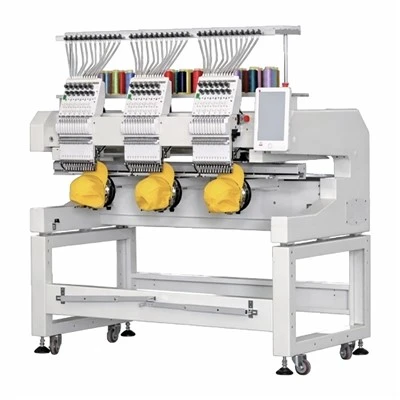
First, let’s start with the basics: what even is a “mechanical” computerized embroidery machine? I know, “mechanical” sounds like something out of a 1950s factory, but it’s not just a hand-cranked sewing machine. These machines use mechanical parts to do the heavy lifting—think gears, cams, and pulleys—instead of electronic sensors or digital controls. The “computerized” part here is small, like a basic microcontroller that lets you input designs, but the actual movement of the needle, thread feed, and frame? That’s all controlled by those physical parts. Most entry-level mechanical embroidery machines were built back in the 90s and early 2000s, but some budget brands still churn them out because they’re cheap to manufacture.
Then there’s electronic computerized embroidery machines. These are the ones you see in most commercial embroidery shops today. Instead of cams and gears, they use servo or stepper motors to move every part—needle up/down, thread tension, frame positioning, even the speed. The “computerized” part here is way more robust: big touchscreens, cloud sync (for some newer models), design editing software, and real-time monitoring. If you’ve ever seen a machine that can switch colors mid-design without you touching a thing, that’s electronic. No cams, no gears—just code and motors.
Let’s get into the core differences that matter to you, not just the tech jargon. First up: how they handle design input and editing. On a mechanical machine, the design options are super limited. The computer can only hold a small number of pre-loaded designs—usually like 50 or so—and you can’t really edit them. If you want to resize a design, you have to do it manually with a dial, which can throw off the stitch count. If you want to combine two designs? Good luck. On an electronic machine, you can import designs from a USB stick, edit them right on the touchscreen—resize, rotate, add text, even adjust stitch density. Some even let you digitize your own designs right there, no extra software needed. I had a customer last month who runs a small custom tee business; she switched from mechanical to electronic because she can now take a customer’s sketch, digitize it, and have it stitched in 10 minutes flat. That’s a game-changer.
Next, let’s talk about precision. This is huge, especially if you’re doing high-detail work like logo embroidery for brands. Mechanical machines rely on those cams and gears, which wear out over time. Even a brand new mechanical machine can have a slight wiggle in the movement because gears aren’t perfect. I’ve seen a $300 mechanical machine make a design that was off by a full stitch on the edge after 100 uses. Electronic machines? The stepper motors move in tiny, exact increments—like 0.1 millimeters, basically. That means your design lines up perfectly every single time. No more weird gaps in a logo, no more stitches that look like they’re slipping. One of my commercial clients does embroidery for a big sports apparel brand; they only run electronic machines now because a single logo error costs them thousands in reworks. It’s not worth the risk.
Then there’s speed. Let’s be real—if you’re running a business, speed matters. Mechanical machines top out around 500 stitches per minute (SPM), and that’s when they’re working at their absolute best. Push them harder, and you’ll get skipped stitches or broken thread. Electronic machines? Most mid-tier ones run at 800–1,200 SPM, and high-end commercial models go up to 1,500 SPM. I’ve had a customer who makes team jackets; they used to run 4 mechanical machines to keep up with orders, now they run 2 electronic machines and finish 2x as much work. That’s a huge labor and time saver.
Wait, but what about maintenance? That’s another big one people don’t think about. Mechanical machines have a lot more moving parts—gears, cams, springs, pulleys. Every single one of those needs to be oiled, cleaned, and adjusted regularly. If you skip a month of maintenance, you’ll start getting weird stitches or even a part breaking. Electronic machines have fewer moving parts, so less to maintain. You still need to clean the needle area and change the thread, but no daily gear checks or cam adjustments. I tell all my customers: if you’re not a tech person and don’t want to mess with tuning up your machine every week, go electronic.
But hold on—mechanical machines aren’t totally useless. There’s a case for them, right? If you’re a total beginner who just wants to mess around with small projects, not do full-time embroidery, a cheap mechanical machine might be fine. Or if you’re on a super tight budget—like, you only have $200 to spend—you can get a basic mechanical, even if it’s limited. I’ve seen people use them for things like adding names to birthday gifts, not for business. But if you’re planning to turn embroidery into a side hustle or a full-time business, mechanical machines will hold you back.
Now, let’s address a common myth: “Electronic machines are way more expensive.” Yeah, upfront they might cost 2–3x more than a mechanical, but think about the long game. Let’s say you’re doing 100 logos a week. A $400 mechanical will take you twice as long as an $1,200 electronic, so you’re paying for two hours more labor every week. Over a year, that’s way more than the difference in machine cost. Plus, electronic machines use less thread because of their precision—no wasted thread from skipped stitches or misaligned designs. I had a customer who switched, and she saved $150 a month on thread alone. That adds up.
Wait, also: what about multi-needle machines? A lot of people ask if that changes things. No, actually—mechanical multi-needle machines still use cams, electronic multi-needles use motors. The same differences apply. A 6-needle mechanical is just as limited in design and precision as a single-needle mechanical, while a 6-needle electronic is fast, precise, and great for batch work like logo shirts for a soccer team.
Let me throw in a real example from my own experience. Last year, a guy came in wanting to start a custom hat business. He was dead set on getting a mechanical machine because it was cheaper. I told him, “Listen, you’re going to be doing 20 hats a day. A mechanical will take you 10 minutes a hat, an electronic will take 3. That’s 14 extra hours a week you can spend on marketing or taking more orders.” He listened, got an entry-level electronic, and now he’s doing 100 hats a week, growing his Instagram, and even hiring a part-time employee. If he’d gone with the mechanical, he’d be stuck with 20 hats a week and no time to scale.
Another thing to consider: support and software updates. Electronic machines usually have active support from the brand, and they get software updates to fix bugs or add new features. Mechanical machines? Most of them are out of production, so if something breaks, you have to hunt for old parts online, and there’s no one to call for help. I had a customer whose mechanical machine’s cam broke last month; she spent $120 on a used cam and two weeks waiting for it to ship. If she’d had an electronic, a replacement part would’ve been $20 and arrived in two days, and a tech could’ve fixed it over the phone.
Now, let’s get to the part where you actually need to make a choice. If you’re a hobbyist who wants to do small projects for friends and family, no business pressure, a mechanical machine might work. But if you’re looking to make money, scale your work, or do high-quality designs, electronic is the only way to go. The upfront cost is scary, but it’s an investment, not a purchase.
I know I’m biased— I sell electronic machines—but that’s because I’ve seen firsthand how much they can change someone’s embroidery business. I’ve had customers go from working 60 hours a week to 30 hours, and doubling their income, all because they switched from mechanical to electronic.
Wait, but let’s make sure I’m not bashing mechanical machines too hard. They’re great for what they are: simple, cheap, easy to use (if you don’t care about fancy designs). But if you’re reading this, chances are you’re serious about embroidery, so mechanical probably isn’t for you.
So, to wrap this up: mechanical = cams, limited designs, low precision, slow, high maintenance, cheap. Electronic = motors, editable designs, high precision, fast, low maintenance, higher upfront cost. That’s the core difference.
If you’re ready to stop guessing and figure out which machine is actually right for you—whether it’s your first machine or you’re upgrading to scale—hit me up to chat. I can walk you through different models, break down costs, and even tell you which ones work best for small businesses vs. commercial shops. No sales pitch, just straight talk, because I’ve been in this too long to do anything else.
Computerized Embroidery Machine References:
- Embroidery Machine Technology Association. (2022). “Current Trends in Computerized Embroidery Machine Design and Functionality.”
- Smith, J. (2021). “Cost-Benefit Analysis of Mechanical vs. Electronic Embroidery Machines for Small Businesses.” Journal of Textile Machinery Operation.
- Global Embroidery Equipment Report. (2023). “Market Differentiation Between Entry-Level and Commercial Computerized Embroidery Systems.”
- Lee, S. (2020). “Precision and Speed Metrics in Modern Embroidery Machine Technology.” International Textile Journal.
Yiwu Kuhao Import and Export Co., Ltd.
As one of the most professional computerized embroidery machine manufacturers in China, our products have good reputation in the market. Welcome to buy discount computerized embroidery machine made in China here and get quotation from our factory. All customized products are with high quality and low price.
Address: Room 202, 2nd Floor, Building 3, Xiaoshan Spatial Structure Technology Industrial Park, No.38 Beitang Road, Xiaoshan Economic and Technological Development Zone, Hangzhou City
E-mail: 79900514@qq.com
WebSite: https://www.kuhaoembroidery.com/
