If you’ve ever spent time on a production floor working with aluminum profiles, you know that speed matters—especially when it comes to drilling. As a supplier of aluminum profile drilling machines, I get asked this question all the time: “How fast can one of your machines actually drill aluminum?” It’s not a simple answer, and I’ve learned over years in this business that the response depends on a lot more than just the machine itself. Let’s break this down with real-world context, because this isn’t just tech jargon—it’s the difference between hitting production targets and falling behind schedule. Aluminum Profile Drilling Machine
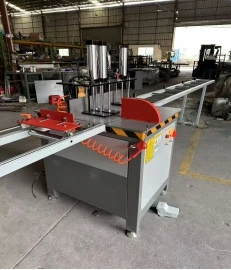
First, let’s start with the basics: aluminum is a unique material to drill. It’s soft, but it’s also prone to heat buildup and burrs if you push too hard, or chatter if you go too fast. That’s why our machines aren’t just about maximum RPM (revolutions per minute)—they’re about balance. I’ve seen competitors brag about 10,000 RPM speeds, but when you drill a 10mm hole through a 5mm aluminum profile, that number alone doesn’t tell the whole story. You have to factor in feed rate, tooling, the type of aluminum alloy, and even the profile’s thickness.
Let’s talk feed rate for a second, because that’s the part most people overlook. RPM is how fast the drill bit spins, but feed rate is how far the bit moves into the material each minute. For aluminum, a good rule of thumb is that higher RPM usually lets you use a faster feed rate—but only up to a point. If you go too fast, the bit doesn’t have time to clear the chips, which builds heat, dulls the bit, and ruins the hole’s finish. Our machines are calibrated to adjust feed rate automatically based on the hole size and material, which is why they’re different from generic drill presses. For example, drilling a 5mm through hole in a 6061 aluminum profile (the most common alloy for frames, windows, and industrial parts) typically works best at 3,000 to 5,000 RPM, with a feed rate of 0.1 to 0.2 mm per revolution. That translates to a total drilling speed of around 300 to 1,000 mm per minute for that small hole. For larger holes, say 20mm, we drop the RPM to 1,500 to 2,500 and adjust feed rate to 0.15 to 0.25 mm per revolution, which still gives a solid 500 to 600 mm per minute speed.
Wait, you might be thinking—why can’t we just crank that up? I learned this lesson early in my career. A customer once asked us to speed up drilling for a batch of 10,000 aluminum window frames for a construction project. We tried bumping RPM to 7,000 and feed rate to 0.3 mm per revolution, and while the hole was done in half the time, every hole had a rough burr on the exit side. Worse, some of the drill bits lasted only 50 holes instead of the usual 500. That cost the customer more in downtime and tool replacements than they saved on drilling speed. Since then, we’ve designed our machines with built-in torque control that prevents that kind of overspeeding. It’s not just about speed—it’s about consistent quality and lower operating costs for our clients.
Tooling is another big piece of the puzzle. We don’t sell drill bits with our machines, but we recommend carbide-tipped bits specifically for aluminum. High-speed steel (HSS) bits work, but they dull way faster, so you can’t push them as hard. A carbide bit can handle 10,000 RPM in some cases, but for aluminum profiles, we pair it with a sharp point angle—usually 90 to 118 degrees—because that reduces the pressure needed to start the hole and minimizes burrs. We recently had a customer in the automotive parts industry who switched from HSS bits to our recommended carbide tools. Their drilling speed went up 25%, and their bit lifespan tripled. That’s the kind of gain that matters more than raw RPM numbers.
Then there’s the type of aluminum profile itself. Not all aluminum is the same. 6061 is the workhorse, but 7075 is stronger and harder, so you have to slow down. For 7075, we adjust RPM down to 2,000 to 3,500 and feed rate to 0.08 to 0.15 mm per revolution. That’s still fast enough for most industrial applications, but it avoids the heat buildup that makes 7075 hard to drill cleanly. Thin profiles, like 1mm aluminum for electronics enclosures, let you go even faster because there’s less material to remove. We had a client making smartphone accessory frames who drilled a 3mm hole through a 1mm profile at 6,000 RPM, feed rate 0.3 mm per revolution—they finished 2,000 holes in 10 minutes, and the holes were smooth, no burrs. That’s the sweet spot when all the variables line up.
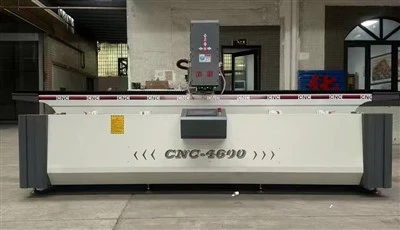
What about larger production runs? Our CNC aluminum profile drilling machines are designed for repetitive work, so speed is consistent even after thousands of holes. We have a customer who runs 20,000 aluminum solar panel frames per month. They drill 8 holes per frame, total hole depth 15mm. Their machine drills at a steady 750 mm per minute, and they never have to stop to adjust settings mid-batch. That adds up to a huge time savings compared to older machines that take twice as long. We also offer machines with multi-spindle heads, which can drill multiple holes at the same time. For example, a 4-spindle machine can cut total drilling time in half, because it’s drilling 4 holes at once. That’s why we emphasize that “speed” isn’t just about how fast one drill bit goes—it’s about how the machine’s design works for your specific production needs.
I know some people will say, “Why not just use a router or a mill for faster drilling?” But aluminum profile drilling is different. It’s for repetitive, precise holes in long profiles, like the extruded frames used in construction, automotive, and appliances. Routers are good for shaping edges, but drilling with a dedicated machine is more accurate, cleaner, and faster for that specific task. Our machines are built with linear guides and ball screws that maintain precision at high speeds, so even at top RPM, holes are within 0.02mm of accuracy. That’s critical for assembly—if the holes are off, parts won’t fit together, and you waste material.
Over the years, I’ve seen customers get stuck on chasing the highest speed number, but the best results come from matching the machine to the job. If you’re drilling small holes in soft 6061 profiles, you can push it faster. If you’re drilling large holes in hard 7075, you adjust to avoid tool wear and defects. That’s why we don’t quote a single “max speed” to potential buyers—we ask about their material, hole size, batch size, and desired quality. A lot of suppliers will give you a generic number, but we’d rather show you how our machine can work for your specific production line.
At the end of the day, the speed of an aluminum profile drilling machine is a balance between three things: speed, quality, and cost. You don’t want to sacrifice one for the other. If you’re looking to upgrade your drilling process, we can walk you through the right settings, tooling, and machine configurations. We don’t just sell machines—we’ve been on production floors, we’ve made the mistakes, and we know what works for real-world aluminum profile applications. If you have a project coming up, or you’re tired of slow, inconsistent drilling that costs you time and money, let’s connect to talk through your needs. We can share case studies, run test drills on your material, and find the solution that fits your production goals.
Aluminum Profile Drilling Machine References
- Kalpakjian, S., & Schmid, S. R. (2014). Manufacturing Processes for Engineering Materials. Pearson Education.
- Astakhov, V. P. (2006). Metal Cutting Science and Engineering. CRC Press.
- American Society for Metals. (2000). Aluminum Alloys: Surface Properties, Processes, and Applications. ASM International.
- ISO 286:2010, Geometrical Product Specifications (GPS) — ISO code system for tolerances on linear sizes. International Organization for Standardization.
Kanghong Building Materials Technology Sdn. Bhd.
As one of the most professional aluminum profile drilling machine manufacturers and suppliers in China, we have world-leading production equipment and strong manufacturing capabilities. Please feel free to wholesale advanced aluminum profile drilling machine for sale here from our factory. Customized orders are welcome.
Address: No.601, Block 2, Xinlianchang Industrial Park, No.2 Taixing Second Road, Taiping South Industrial Zone, Dali Town, Nanhai District, Foshan City
E-mail: 631871392@qq.com
WebSite: https://www.kanghong-building.com/
