If you’ve ever worked with metal stamping parts—whether as a product designer, manufacturing engineer, or procurement manager—you’ve probably asked this question at some point: “What’s the minimum order quantity (MOQ) for a metal stamping job?” As a metal stamping supplier with over 15 years in the business, I can tell you there’s no one-size-fits-all answer. MOQs here aren’t arbitrary numbers pulled out of thin air; they’re rooted in how metal stamping works, the costs behind every job, and the unique needs of each customer. Let’s break this down so you can understand why MOQs matter, what factors shape them, and how to negotiate one that works for your project. Metal Stamping Parts
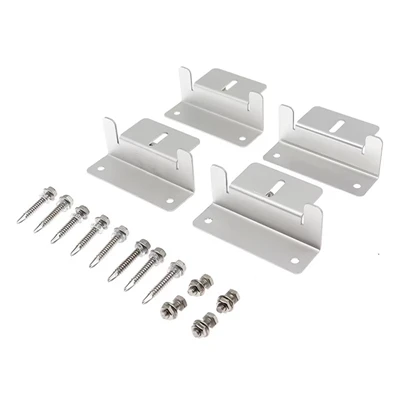
First, let’s start with the basics: what is metal stamping, and why does its process make MOQs non-negotiable for most jobs? Metal stamping is a manufacturing method that uses dies—custom tooling made from hardened steel—to cut, bend, or form sheet metal into precise parts. Each die is designed for a specific part, and building that die is one of the biggest upfront costs for any stamping project. For example, a simple bracket die might cost $1,500, while a complex automotive bracket with multiple bends and holes could run $10,000 or more. That die isn’t reusable for a different part, so to spread that $10,000 cost over enough units to make the per-part price reasonable, we need to produce a certain number. If a customer only wants 50 of that complex bracket, adding die cost to 50 parts would make each one $200—way too expensive for most budgets. But if we spread that same $10,000 over 10,000 parts, the die cost drops to $1 per part, which is manageable. That’s the core of MOQs for stamping: covering upfront tooling costs so the part price is competitive.
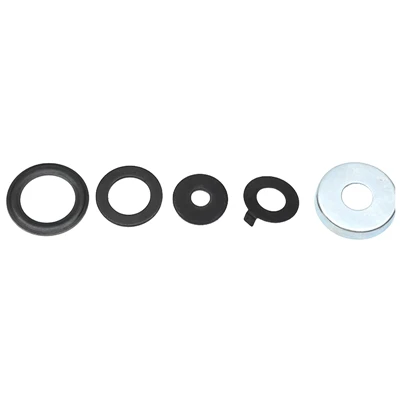
But MOQs aren’t just about tooling. There are other production costs that scale with order volume, too. Setting up a stamping press for a new job takes time: we have to load the die, adjust the press to make sure the part dimensions are correct, run a test part, inspect it for defects, and make tweaks if needed. This setup time is the same whether we run 100 parts or 10,000. For a small order, that setup time eats into profit, so we need to make sure the order volume is high enough to offset it. Then there’s material waste: metal stamping produces scrap, and larger orders often let us optimize the sheet layout to cut down on waste. For example, a 4×8 foot sheet can fit 20 small washers, but we might only fit 12 if we’re only making 100 washers. That higher material cost per unit for small orders also factors into MOQ calculations.
Now, let’s get to the numbers: what are the typical MOQs for metal stamping parts, and how do they change based on the type of part? I’ve seen MOQs range from 100 units for extremely simple, low-tool parts to 100,000+ units for high-volume, complex automotive or aerospace parts. Let’s break that down.
Simple parts—think brackets, washers, or small clips that only require a basic cut or single bend—usually have lower MOQs. If a part uses a pre-existing, off-the-shelf die (not custom tooling), MOQs can drop to 100 or even 50 units. These are the jobs we’re happy to take for small-batch prototyping or low-volume projects, because we don’t have to cover custom die costs. I remember a customer a few years back who needed 75 small stainless steel brackets for a trade show display—we had a standard die for that exact part, so the MOQ was only 100, and we ran their 75 units without issue. That’s the sweet spot for small orders: parts that don’t need custom tooling.
Mid-volume parts—things like enclosure brackets, electrical contacts, or automotive interior trim pieces—fall in the middle, with MOQs between 500 and 5,000 units. These usually need custom tooling, but not overly complex dies. For example, a clip that bends a piece of aluminum into a U-shape with two small holes is a mid-volume part. The die for that might cost $2,000, so spreading that over 1,000 units brings die cost to $2 per part, which paired with setup and material costs makes a reasonable $5 per part. This is the MOQ most of our general industrial customers work with, and it’s a happy medium because it’s manageable for small to mid-sized businesses, and keeps production lines running efficiently.
High-volume parts—those for automotive, medical devices, or consumer electronics—have much higher MOQs, often 10,000 to 100,000 units or more. These parts are complex, with multiple forming steps, tight tolerances (sometimes within 0.001 inches), and require advanced tooling that can run 24/7. For example, a car door hinge that needs five separate stamping operations has a die that might cost $15,000. Spreading that over 10,000 units is $1.50 per part, and when you add in the cost of a multi-slide press (which is far more expensive than a standard stamping press), the per-part cost only makes sense at 50,000 units. I’ve worked with an automotive supplier for the last 8 years who runs 50,000 door hinges a year for a domestic car manufacturer—if they tried to order only 5,000, the part would cost three times as much, and their total project budget would blow up.
But here’s the thing: MOQs aren’t set in stone. As a supplier, we’re not just here to push 10,000 units on every customer. Sometimes a customer needs a smaller order for prototyping, a short production run, or to test a new product. We have options for those cases. For example, prototyping runs: if a product designer needs 10 or 20 parts to test fit and function, we can run those without a full production die. We use prototype tooling, which is made from softer material (like aluminum instead of hardened steel) and is cheaper and faster to make, even if it only lasts a few hundred parts. The MOQ for prototype tooling is often around 25 units, which is perfect for testing. I’ve helped dozens of startups get their first parts made this way—last year, a medical device startup needed 20 test parts for a new glucose monitor, and we used prototype tooling to get them made in a week at a reasonable cost.
Another exception: if a customer is willing to pay higher per-part costs, we can lower MOQs for custom parts. Let’s say a customer needs 300 of a complex custom bracket. The die cost is $5,000, so that’s $16.67 just for die. Add setup and material costs, and the part might be $25 each. If that’s within their budget, we can do it—we just factor the higher per-part price into the quote instead of spreading the die cost over more units. We do this all the time for customers working on proof-of-concept projects or niche products where demand isn’t high enough for 5,000 units. The key is transparency: we tell the customer up front that the MOQ is lower, but the part cost will be higher, and they have to weigh that against their needs.
There are also factors that can lower MOQs regardless of part complexity. For example, if a customer can drop off their own material, we don’t have to cover the cost of sheet metal, which reduces our total costs and lets us offer a lower MOQ. We’ve had a few aerospace customers who bring their own titanium sheet for parts, and in those cases, we can run as few as 200 units because we’re not bearing material costs. Another factor: if a customer places a repeat order within a year, we can often waive a portion of the die cost or lower the MOQ because we already have the tool on hand. That’s why building a long-term relationship with a supplier pays off—we’re more flexible for customers who come back.
But there are also factors that can increase MOQs, and it’s important to be aware of those if you’re a procurement manager. For example, exotic materials: titanium, stainless steel, or copper have higher material costs and are harder to form, so the die wear is higher, meaning we need to run more units to cover tool replacement. A part made from titanium might have an MOQ of 2,000 units instead of 1,000 for steel. Tight tolerances: if a part needs to fit with a precision of 0.005 inches, we have to run more test parts and adjust the press more, increasing setup time, so MOQs go up. For example, a medical implant component with tight dimensional tolerances might have an MOQ of 5,000 units, versus a similar part with loose tolerances that has an MOQ of 1,000.
I’ve seen a lot of customers get frustrated with MOQs, especially when they’re new to manufacturing, and I get it. When you’re building a new product, you don’t want to have to order 5,000 parts when you only need 100. But from our side, MOQs are about sustainability: we’re a small business, and we can’t afford to take a job that loses money just to make a customer happy. If we run a 200-unit custom part at a $5 loss per part, that’s $1,000 out of our pocket, which adds up over time. That’s why we work with customers to find middle ground.
For example, a customer who needed 300 custom electrical contacts a few years back didn’t have the budget for our standard 1,000 MOQ. We suggested a hybrid: we’d make 500 units (slightly above their original request) and split the die cost between us—we covered 40%, they covered 60%, bringing their per-part cost down. That worked for both of us: they got the quantity they needed for their launch, and we didn’t lose money on the job. It’s that kind of flexible approach that keeps customers coming back, and it’s why MOQs don’t have to be a roadblock.
Another point to consider: MOQs are also tied to press capacity. If a supplier has a 500-ton press that can run 10,000 parts a day, they’re going to want to fill that press time with a large enough order to make it worth their while. If a customer only wants 1,000 parts, that’s a half-day run for the press, and the supplier might have turned down another larger order that day. So MOQs also account for opportunity cost: the supplier has to make sure the time spent on your job isn’t time they could have spent on a more profitable one. That’s something many customers don’t think about, but it’s a key reason MOQs exist.
So what should you do if you’re trying to figure out the MOQ for your metal stamping part? First, start by talking to your supplier early in the design process, not after you’ve finalized your part drawings. A good metal stamping supplier can look at your part, the material you’re using, and your timeline, and give you a realistic MOQ, along with options for prototyping, small runs, and high-volume production. Don’t be afraid to ask questions: “Can you lower the MOQ if I pay a higher per-part price?” “Do you have prototype tooling available?” “Can I use my own material to reduce costs?”
As a supplier, I’m always happy to answer these questions. I’ve worked with startups, small businesses, and large corporations, and I know that every project has unique needs. Whether you’re building a new consumer product that needs 50 test parts, or an automotive component that needs 50,000 units a year, the right MOQ is one that works for both sides—so we can make a quality part, and you can stay within your budget.
If you’re ready to discuss your metal stamping part project, including MOQs, tooling options, and pricing, feel free to reach out to us. We’re here to walk through your needs, answer your questions, and find a solution that fits your project.
Garden Tool Parts References
- Groover, M. P. (2020). Fundamentals of Modern Manufacturing: Materials, Processes, and Systems. John Wiley & Sons.
- George, T. (2019). Metal Stamping Handbook: Design, Tooling, and Production. Society of Manufacturing Engineers.
- American Iron and Steel Institute. (2021). Guide to Metal Stamping and Forming Processes.
- Birinci, B., & Ozsel, E. (2018). Cost Optimization in Sheet Metal Stamping Operations. International Journal of Production Research.
- Society of Manufacturing Engineers. (2022). Prototyping Methods for Metal Stamping Parts.
Ningbo New Fanfeng Tools Co., Ltd.
With abundant experience, we are one of the most professional metal stamping parts manufacturers and suppliers in China. Please rest assured to buy bulk customized metal stamping parts at competitive price from our factory. If you have any enquiry about quotation, please feel free to email us.
Address: No.18, Zhangjia Industrial Zone, Shangtian Subdistrict, Fenghua District, Ningbo City
E-mail: 13081992660@163.com
WebSite: https://www.cnnewfanfeng.com/
