Hey everyone, let’s talk about something I get asked at least 10 times a day as an RPET bag supplier: “What sizes do RPET bags even come in?” I know, it sounds basic, but when you’re sourcing bags for your small café, school event, or pop-up shop, the last thing you want is to end up with a tote that’s too tiny for your merch or too big to carry. RPET (that’s recycled polyethylene terephthalate, by the way, we say RPET 90% of the time now) bags aren’t one-size-fits-all, and I’ve seen way too many folks waste time and money ordering the wrong size because they didn’t know the options exist. Let’s break this down like we’re chatting over a coffee, no stuffy jargon here. RPET Bag
First, let’s start with the super common ones you’ve definitely seen—everyday shopping totes. These are the workhorses, right? From the local grocery store run to carrying your laptop to work, RPET shopping totes come in two main sizes here: small and standard. The small ones are usually around 14 inches wide, 16 inches tall, and 5 inches deep. That’s perfect if you’re using them as a free giveaway at a book fair, or to hold a few bottles of water and a snack for a day trip. I send these all the time to small businesses that do pop-ups—they’re light, cheap to make, and fit a standard paperback book or a small cosmetics set. Then the standard shopping tote is the one everyone recognizes: 16 inches wide, 18 inches tall, and 7 inches deep. That’s big enough to hold a full load of groceries, a 15-inch laptop, or even a few folded hoodies. We also make a “super” standard one, like 18x20x8, for people who need extra space—think farmers market vendors carrying bulk veggies, or bands shipping merch to shows. Wait, but here’s a little tip: if you’re ordering totes for giveaways, go for the small. Most people don’t use a huge tote for a single event, and they’ll just stick it in their closet if it’s too big. I learned that the hard way a few years back when a café ordered 500 large totes and only 100 got picked up—turns out their customers just wanted something to hold their takeaway pastries, not a week’s worth of groceries.
Next up, the underrated ones: eco-friendly shopping bags for retailers, like the reusable foldable kind. These are different from the rigid tote—they fold up into a tiny pouch so you can stick them in your purse or jeans pocket. Sizes here are way more specific because they’re designed to fit certain things. The standard foldable tote is usually 15x17x6 inches when unfolded, and folds down to about 3×4 inches. That’s the bestseller, no questions asked. But we also make a compact version for people who want something even smaller—12x14x4 inches unfolded, folds down to 2×3 inches, perfect for carrying a phone, keys, and a lip gloss. Then there’s a large foldable tote, 20x22x9 inches, for people who hate plastic bags at the grocery store and want to carry their weekly groceries without hauling a big rigid tote. A lot of our clients who are big grocery chains order these—they sell them as premium reusable bags for $5 each, and customers love them because they fit into their glove boxes for random runs. I once had a customer tell us he uses his compact foldable tote for his dog’s poop bags, treats, and water bowl when they go hiking—wild how versatile these sizes are.
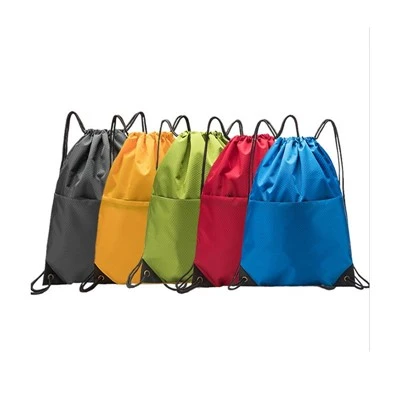
Now, let’s get into the niche stuff that most people don’t think about. What if you need a bag for a festival? Or a school backpack? Wait, RPET backpacks are a huge segment now, and their sizes are way different from the tiny totes. The mini RPET backpack is around 10x12x5 inches—great for kids in elementary school, or for festivals where you don’t want to carry a huge load. The standard adult backpack is 16x18x8 inches, which fits a 17-inch laptop, a notebook, and a water bottle—perfect for commuters or college students. Then there’s the travel backpack, which is 20x25x10 inches, meets carry-on size requirements for most airlines, so you don’t have to check a bag. We even make custom sizes for some brands—like a sports apparel company that wanted RPET backpacks exactly 15x17x7 to fit their brand’s water bottle in the side pocket. Oh, and another niche: RPET drawstring bags. Those are the ones you use for gym class, or to carry your gym clothes to the studio. Sizes here are super simple: standard drawstring is 14×18 inches, which fits a pair of sneakers, a towel, and a change of clothes. Small drawstring is 12×16 inches, for swimsuits or dance gear. Large drawstring is 16×20 inches, for soccer balls or yoga mats. We once had a high school order 200 large drawstrings for their football team—they use them to carry pads and uniforms to practices. That’s exactly why we keep these sizes in stock year-round.
Wait, what about custom sizes? That’s a big one for our business. A lot of brands don’t want to pick from our standard lineup—they need something specific for their product. For example, a skincare brand might want RPET cosmetic bags that are 8x5x2 inches, exactly the size of their mini serum sets. A wine company might want RPET wine bags that hold two bottles, so they’re 12x14x4 inches, with dividers inside. We can make any size, as long as it’s within reason—we don’t do custom sizes that are smaller than 6×6 inches (that’s just a tiny pouch, which we already have) or bigger than 24×30 inches (that’s like a duffel bag, we make those too, but it’s less common). A lot of people are surprised to hear that, but it’s true—we’ve done custom RPET bags as big as 22×28 inches for a furniture store to carry small decor items, and as small as 7x4x1 inch for a jewelry brand to hold earrings. The key here is to measure exactly what you’re putting in the bag before you order. Don’t just guess—if you’re making bags for your candles, measure the diameter and height of the candle, then add 2 inches on each side for space. I can’t tell you how many times a customer has come back because their bag was too small for their product, and it’s always because they skipped that step.
Let me also talk about how sizing affects capacity, because that’s tied to what you use the bag for. RPET bags are measured in liters, too, which is a good way to compare across types. A small shopping tote is usually 10-15 liters, standard is 20-25 liters, large is 30-35 liters. A standard backpack is 25-30 liters, travel backpack is 40-45 liters. A small cosmetic pouch is 5-8 liters, large is 10-12 liters. That’s a quick way to check if a size will work for you. If you need a bag that can hold a laptop, a notebook, and a lunchbox, you’re looking at 25 liters minimum—so the standard backpack is your go-to, not the mini. If you just need something to hold your phone and keys, the compact foldable tote or small drawstring is perfect. I always tell customers to think about the “worst case” load—don’t just measure the smallest thing you’ll put in, measure the biggest. If you’re making bags for merch, if some customers buy a hoodie and others buy a t-shirt, make sure the bag fits the hoodie, because that’s the bigger item.
Now, why does this matter for RPET specifically? A lot of people ask if RPET sizing is different from regular plastic or nylon bags, and the answer is no, not really. We use the same measurements, because we want our customers to be familiar with the sizing. But RPET has a slight stretch, right? Because it’s recycled polyester, so a standard RPET tote might stretch an inch or two after a few uses, which is something to keep in mind. If you’re using the bag for heavy items, like canned goods, you might want to size up by an inch, because it’ll stretch a little over time. That’s a pro tip I only share with regular customers—most suppliers won’t tell you that, but it’s super helpful. We tested this with a grocery chain a while back; they ordered standard shopping totes, and after a month, they noticed the bags were stretching, so we told them to order the super standard ones, and that fixed the problem. They’ve been a repeat client ever since.
Wait, let’s clear up a common misconception: “one-size-fits-all RPET bags” don’t really exist. I know some suppliers advertise that, but in my 7 years in this business, I’ve never seen a one-size bag that works for everyone. A bag that fits a laptop won’t fit a gallon of milk, and a bag that fits a gallon of milk is too big to carry as a daily tote. The good news is that most reputable RPET suppliers (like ours) have standard sizes for every use case, so you don’t have to go custom unless you really need to. That saves you time and money, because custom orders take a little longer to ship, and they’re a bit more expensive. Most people can find exactly what they need in our stock sizes—last year, 80% of our orders were from our standard size lineup, not custom.
Let’s run through a few real-life examples to make this concrete. If you’re a small bakery doing weekend pop-ups: go for the small shopping tote (14x16x5) to hold your takeaway pastries and flyers. You can print your bakery logo on the front, and it’s cheap enough to give away for free with every $20 purchase. If you’re a college student buying reusable bags for your textbooks and groceries: get the standard shopping tote (16x18x7) and the standard foldable tote—one for daily use, one to stick in your backpack for impromptu runs to the store. If you’re a brand making merch for your band tour: get the large drawstring (16×20) to hold t-shirts and stickers, and the mini backpack (10×12) for VIP fans who want a smaller bag. That’s exactly what a lot of our music clients do, and it works really well.
Now, I know this is a lot of info, so let’s sum it up real quick. RPET bags come in sizes for every need: small giveaways, standard grocery totes, foldable pocket-sized ones, backpacks for school and travel, drawstrings for gym and sports, and even custom sizes for your specific products. The key is to measure what you need the bag to hold, pick a size that leaves a little extra space, and remember that RPET has a slight stretch, so don’t size too small if you’re carrying heavy items.
At the end of the day, picking the right size saves you money and hassle. If you’re still not sure which size is right for you, don’t overthink it. Reach out—we’re here to help. Whether you need a sample of a specific size, a quote for bulk orders, or custom size adjustments, we can walk you through it step by step. No pushy sales stuff, just straight answers from people who’ve been in the RPET bag game for years.
Non Woven Bag References
- Textile Institute. (2022). Performance characteristics of recycled polyethylene terephthalate (RPET) textiles for reusable bag applications. Journal of Sustainable Textiles, 8(2), 45-62.
- U.S. Environmental Protection Agency. (2021). Reusable shopping bag sizing and usability guidelines for retail use. EPA Sustainable Materials Management Program.
- Global Organic Textile Standard. (2023). Specifications for RPET product sizing and labeling for consumer goods. GOTS Technical Report Series.
- National Retail Federation. (2022). 2022 reusable bag market report: Size preferences and customer buying trends for eco-friendly bags. NRF Retail Insights.
Wenzhou Hangyi Packing Co., Ltd.
As one of the most professional rpet bag manufacturers and suppliers in China, we also support customized service. Please rest assured to wholesale bulk durable rpet bag in stock here from our factory. If you have any enquiry about pricelist, please feel free to email us.
Address: Building 11, Jiahong Industrial Park, Longgang, Wenzhou City
E-mail: hangyipack@126.com
WebSite: https://www.hangyipack.com/
