Hey guys, let’s cut to the chase. If you’re here googling “can I upgrade my disc vacuum filter’s control system with new accessories?” you’re probably not just curious—you’re tired of that clunky, outdated setup holding back your filtration operation. Maybe your filter’s been spitting out inconsistent cake moisture, or you’re spending 10+ hours a week fixing sensor glitches, or you’ve seen coworkers at other plants pull 20% more throughput with the same equipment. Let’s be real: upgrading doesn’t mean buying a whole new disc vacuum filter (DVF) — that’s the most expensive, unnecessary move 9 times out of 10. As someone who’s supplied DVF accessories for over 15 years, I’ve seen every messy control upgrade fail and every smooth one blow operations out of the water. Today, I’m breaking down if your setup even needs it, what parts actually work, and how to do it without blowing your budget. Disc Vacuum Filter Accessories

First, let’s answer the core question: Yes, you can absolutely upgrade your DVF’s control system with new accessories. But first, you need to figure out if your current control system is the actual bottleneck. A lot of plant managers point to their control system when the real issue is worn discs or a clogged slurry pump. Let’s do a quick, 5-minute check you can run right now: Walk up to your control panel and watch it for a shift. If you see it manually adjusting vacuum pressure every 30 minutes, or it’s throwing error codes for “low disc speed” that don’t line up with cake moisture, or your operators are pausing it constantly to tweak settings, that’s a dead giveaway your control’s outmatched. If it’s just acting like a “set it and forget it” that works okay but could be better, a targeted accessory upgrade will get you there.
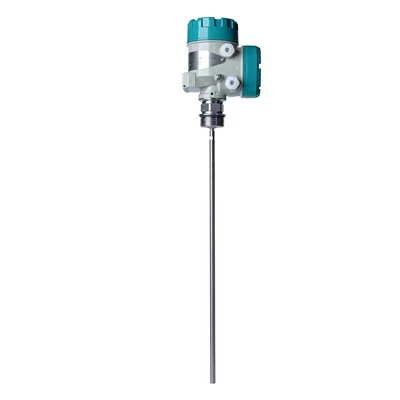
Now, let’s talk about the right accessories to actually upgrade that control system—no random parts that’ll break in 6 months. The most common (and impactful) upgrade is smart sensor kits, not cheap plastic replacements. Old DVF control systems use analog sensors that drift after 1-2 years—they’ll tell you vacuum pressure is “15 psi” when it’s actually 12, or cake moisture is “22%” when it’s 26% which is way too wet for your next process. Today’s smart sensors plug right into your existing PLC (if you have one) or even a basic standalone controller, so you don’t need to rewire your whole panel. I’ve seen clients swap their old pressure sensors for digital, temperature-compensated ones, and immediately cut 15% in energy costs because the control stops running vacuum at full blast when the slurry is thinner.
Wait, what if you don’t have a fancy PLC? No problem—there are plug-and-play control modules made specifically for DVFs. These aren’t the generic PLCs you’d use for a conveyor; they’re pre-programmed to handle the unique stuff a DVF does: adjusting disc speed based on cake thickness, auto-clearing vacuum lines, and even syncing with your slurry feed pump. Last year, a mine client of mine with a 10-year-old DVF didn’t want to shell out $80k for a new filter, so we hooked them up with a $12k plug-and-play control module and a set of edge detectors. In 3 months, their throughput went up 18% and maintenance calls on the control dropped to zero. That’s the kind of win we’re talking about.
Another underrated upgrade: motor control center (MCC) relays paired with variable frequency drives (VFDs) tailored for DVFs. Old DVFs use constant-speed motors that waste energy when the filter isn’t running at full load. A VFD accessory is easy to bolt onto your existing motor, and it talks directly to your control system to adjust disc speed in real time. For example, if your slurry feed slows down, the VFD will slow the discs so you don’t waste energy pulling vacuum on an empty section. We recently supplied these to a wastewater treatment plant, and their monthly electricity bill for the DVF dropped by $1,200. That’s a return on investment in 45 days.
But here’s the mistake most people make: they buy random sensors or VFDs from a hardware store and try to bolt them on. DVFs operate in harsh environments—wet, full of particulates, often near corrosive chemicals. A cheap sensor might get corroded in 3 months and mess up your whole control system. As an accessories supplier, we test every part we send for IP68 waterproofing and resistance to common slurry chemicals like lime or coal fines. I can’t tell you how many times a client has called us panicking because a “bargain” sensor fried after 2 weeks—we get them set up with a proper one, and it lasts 5+ years.
Now, let’s cover if this upgrade makes financial sense. You might be thinking, “Is this worth more than repairing my current control system?” Let’s do the math. A full control system upgrade with all the necessary accessories (sensors, VFD, plug-and-play module) usually runs between $8k and $18k, depending on the size of your DVF. The average DVF operator wastes 20-30 hours a month messing with control issues—if your labor costs are $50/hour, that’s $1,000-$1,500 a month in wasted time, plus energy waste. Most clients see ROI in 2-6 months, not years. And if you’re planning to expand your operation in the next 3 years, a modular control upgrade lets you add more features later without redoing the whole setup.
Wait, but what if my DVF is super old, like 20+ years? Can I still upgrade the control system with accessories? Hell yeah—we’ve done it with DVFs from the 90s that were written off by other suppliers. The key is to pick accessories that are compatible with your existing wiring and mechanical setup. We even have custom adapter kits for super old DVFs that let you modernize the control without cutting or replacing existing wires. A grain processing client with a 25-year-old DVF upgraded their control last year with our adapter kit and smart moisture sensors, and they’re still using it daily—no issues at all.
Let’s also talk about common myths that hold people back. First myth: “Upgrading the control system means I have to train my operators on a whole new computer.” No way—modern control accessories have simple, touchscreen interfaces that take 1 hour to train on. Most operators pick it up in a single shift, not days. Second myth: “I’ll have to shut down the filter for a week to install it.” A proper accessory upgrade takes 8-12 hours of downtime, scheduled during your weekly maintenance window. We even send our technicians to help with installation if you want, but most of our customers do it themselves with a basic electrician—we send step-by-step guides and troubleshooting tips. Third myth: “It’ll void my warranty.” Wait, what warranty? Most old DVFs don’t even have warranties, and the accessory manufacturers we work with don’t void your existing equipment warranty as long as the parts are installed correctly. We’ve had clients ask their original filter manufacturers, and 9 out of 10 say a control accessory upgrade doesn’t affect their warranty.
Now, let’s get into a real example to make this concrete. Last year, a zinc smelter hit us up—their 12-disc DVF had been running the same control system for 11 years. They were getting 18% cake moisture, which meant they had to spend extra on a dryer downstream, and their throughput was 12 tons/hour, which was 15% less than the plant next door. We walked them through a targeted upgrade: digital vacuum and cake moisture sensors, a VFD for the disc motors, and a plug-and-play control module. Total cost was $11,200. The results? Cake moisture dropped to 14.5% so they could turn off their dryer for 2 hours a day, throughput jumped to 14.5 tons/hour, and their labor for control maintenance fell from 5 hours a week to 1 hour. Their ROI was 37 days. That’s not a fluke—we’ve had dozens of clients with almost identical numbers.
So when should you skip the accessory upgrade and replace your control system entirely? Only if your control panel is rusted beyond repair, or your PLC is so old that there are no replacement parts for it. Even then, we usually recommend a hybrid upgrade—replace the core PLC but keep your existing motors and discs, pairing it with smart accessories. It’s cheaper than a full panel replacement, and it’s still way better than buying a whole new DVF.
At the end of the day, upgrading your disc vacuum filter’s control system with new accessories isn’t just a “nice to have”—it’s one of the highest ROI improvements you can make to your filtration operation. You’re not tossing out perfectly good equipment; you’re adding smart parts that fix the small, annoying issues that add up to big costs.
If you’re tired of inconsistent results, wasting time on control repairs, or paying too much for energy, let’s chat. We can walk through your specific setup, give you a customized quote, and even help you figure out if an upgrade is right for you. No sales pitches, no confusing jargon—just straight talk about what works for your DVF. Don’t let an outdated control system hold your operation back. Reach out to start the conversation today.
Disc Vacuum Filter Accessories References
- International Society of Automation (ISA) – “Filtration Process Control: Optimizing Disc Vacuum Filter Operations”
- World Environmental & Water Resources Congress (EWRI) – “Retrofit Strategies for Industrial Solid-Liquid Separation Equipment”
- Mining Engineering – “Energy Efficiency Improvements in Mineral Processing Filtration Systems”
- Chemical Processing Magazine – “Modular Control Upgrades for Aging Industrial Equipment”
Shandong Zhongyu Industrial Control Technology Co., Ltd.
As one of the most professional disc vacuum filter accessories manufacturers and suppliers in China, we have world-leading production equipment and strong manufacturing capabilities. Please rest assured to buy customized disc vacuum filter accessories at competitive price from our factory.
Address: 1-2408, Building B, Huanqi Building, No.165 Xincun West Road, Mashang Street, Zhangdian District, Zibo City, Shandong Province
E-mail: Dave@sdzygk.com
WebSite: https://www.ceramicdiscfilter-zy.com/
