Let me start by saying, as someone who’s been supplying feed grinders for 12 years, one of the most common questions I get from farm owners, feed mill operators, and even small-scale livestock producers is this: “Do your grinders produce dust?” Feed Grinder

I get it—dust isn’t just a nuisance. It’s a safety hazard (we’ve all heard stories of grain silo dust explosions that leveled entire facilities), it ruins adjacent equipment, it’s bad for animal respiratory health, and it’s a pain to clean up. Years ago, I used to downplay dust production with generic lines like “our grinders are pretty low-dust.” But after working with hundreds of operations, I’ve learned the answer isn’t a simple yes or no. It’s: It depends on the grinder’s design, the material you’re grinding, and how you operate and maintain it. And the good news? It’s totally controllable.
First, let’s break down why feed grinders produce dust in the first place. When you’re processing any raw feed material—corn, soybeans, wheat, alfalfa, even byproducts like distillers’ dried grains—you’re breaking down whole kernels or chunks into smaller particles. The size of those particles directly correlates to dust: finer grind equals more surface area, which means more airborne particles. But that’s just part of it. Older, open-design grinders (think: early hammer mills with unenclosed grinding chambers) don’t have adequate air management. When the hammers strike material, it propels fine particles out of the chamber instead of directing them toward the outlet. That’s the biggest culprit for excess dust in subpar equipment.
I’ve seen this firsthand with a small family farm I worked with in central Iowa 8 years ago. They’d upgraded to a budget grinder from a big-box supplier, and within a month, their entire barn was covered in a fine corn dust that settled on their cattle’s feed troughs and even their waterers. When I inspected the grinder, the problem wasn’t the material they were grinding—it was that the grinding chamber was a open box with no exhaust or air flow control. The fine particles weren’t being pulled through the screen; they were just escaping into the air. We retrofitted it with a simple duct system and a low-volume dust collector, and their dust levels dropped by 90% within a week. That’s when I realized: most dust issues aren’t from the grinder itself, but from how it’s set up.
So, how do you actually control dust from a feed grinder? Let’s cover the practical, field-proven steps that work, not just theoretical jargon.
First, match your grinder’s design to your feed type and production scale. Not all grinders are created equal. There are two main types we supply: hammer mills and roller mills. Hammer mills are the most common for fine grinding (perfect for swine or poultry feed), and they’re actually much lower-dust when designed with a fully enclosed grinding chamber and a controlled air flow system. Open-top hammer mills, on the other hand, are designed for small-scale DIY use, and they’ll always produce more dust because there’s no way to contain the particles. Roller mills, which crush material between two rotating rollers instead of hammering it, produce far less dust because they create fewer fine particles in the first place. That’s why many large commercial feed mills use roller mills for base grains and only switch to hammer mills when they need extremely fine particle sizes.
Next, control the moisture content of your feed material. This is a tip that’s so simple, most operators overlook it. Dry material = more dust. If your corn or soybeans are below 14% moisture (the safe storage level), you’re going to see a lot more fine airborne particles. I recommend adding a small amount of water—usually 1-2 gallons per ton of feed—before grinding. It doesn’t make the feed soggy, but it adds just enough weight to the fine particles so they don’t float into the air. I tested this last year with a customer in Minnesota who was grinding dried distillers’ grains (DDGs), which are naturally low in moisture. His air quality readings showed 12 mg of dust per cubic meter of air before we adjusted moisture levels; after adding 1.5 gallons per ton, that dropped to 2.8 mg, which is well below the OSHA limit of 4 mg per cubic meter for grain dust. That’s a huge difference, and it cost him almost nothing to implement.
Then, implement proper exhaust and dust collection systems. This is the backbone of dust control. Every grinder should be connected to a dedicated duct system that pulls air (and fine particles) out of the grinding chamber, through a cyclone separator, and either vents the filtered air outside or returns it to the facility. Cyclones work great because they spin the air, forcing the heavy feed particles to fall into a collection bin, while the clean air exits. For smaller operations, a portable baghouse filter works too—they’re compact, easy to install, and capture even the smallest particles that cyclones miss. A mistake I see often is operators using a single dust collector for multiple pieces of equipment. If your grinder, mixer, and conveyor all share one collector, the air flow is too weak for each machine, so dust escapes. We always recommend sizing the collector specifically for your grinder’s capacity: a 10 HP hammer mill needs a 1,500 CFM collector, while a 50 HP unit needs 6,000 CFM. Getting that sizing right eliminates 70% of dust issues right there.
Don’t forget regular maintenance. A grinder that’s falling apart will produce more dust. Worn hammers, loose screens, or gaps in the grinding chamber doors all create escape routes for fine particles. I’ve had customers call me saying their grinder has suddenly started blowing dust everywhere, only to find out they hadn’t replaced their hammers in 3 years. Hammers should be replaced every 1,500-2,000 hours of operation, and screens should be checked for tears monthly. Even something as simple as keeping the grinding chamber doors tightly sealed with new gaskets when they wear out makes a huge difference. Last year, a customer in Ohio told me his dust levels had gotten so bad his employees were wearing N95 masks all day. When we inspected, we found his chamber had a ½ inch gap where the door met the frame—fixed that with a $20 gasket, and his dust was gone.
Now, let’s address the myth that you have to sacrifice grind quality for low dust. I’ve had operators tell me, “If I slow down the grinder to reduce dust, my feed isn’t fine enough for my livestock.” But that’s not true. With the right design and settings, you can have a consistent fine grind with minimal dust. For example, adjusting the rotor speed on your hammer mill: too fast, and you’ll create more fine particles; too slow, and the grind is inconsistent. Finding the sweet spot—usually 3,000-3,600 RPM for most commercial units—gives you a uniform particle size without excess dust.
I also want to be transparent: no grinder is 100% dust-free. Even the most advanced commercial feed grinders will produce a small amount of fine particles, and that’s normal. The goal is to get dust levels below safety and comfort thresholds. The OSHA limit for grain dust is 4 mg/m³, and most well-maintained, properly set up grinders I supply hit between 2-3 mg/m³, which is well within that range. The extra dust you get with older or poorly designed grinders is avoidable.
Over the years, I’ve worked with everything from 100-head family farms to 100-ton per hour commercial feed mills, and the pattern is always the same: the operations that invest in proper grinder design, moisture control, and dust collection have far fewer dust-related issues than those that cut corners. I had one customer in Wisconsin who installed a low-dust hammer mill, added a cyclone, and adjusted his moisture levels. He told me he not only had 90% less dust in his barn, but he also saved 5% on his feed costs because the fine particles that used to escape were now collected and fed to his cattle, instead of being wasted. That’s a double win—less mess, more profit.
If you’re dealing with dust issues from your current grinder, don’t just assume all grinders produce the same amount of dust. It’s worth talking to someone who knows the difference between a properly designed low-dust unit and a budget grinder that’s built to only do the job, not the job cleanly. I’ve seen too many operators waste money on retrofits for old grinders when they could invest in a new, properly designed unit that eliminates most dust issues from the start.
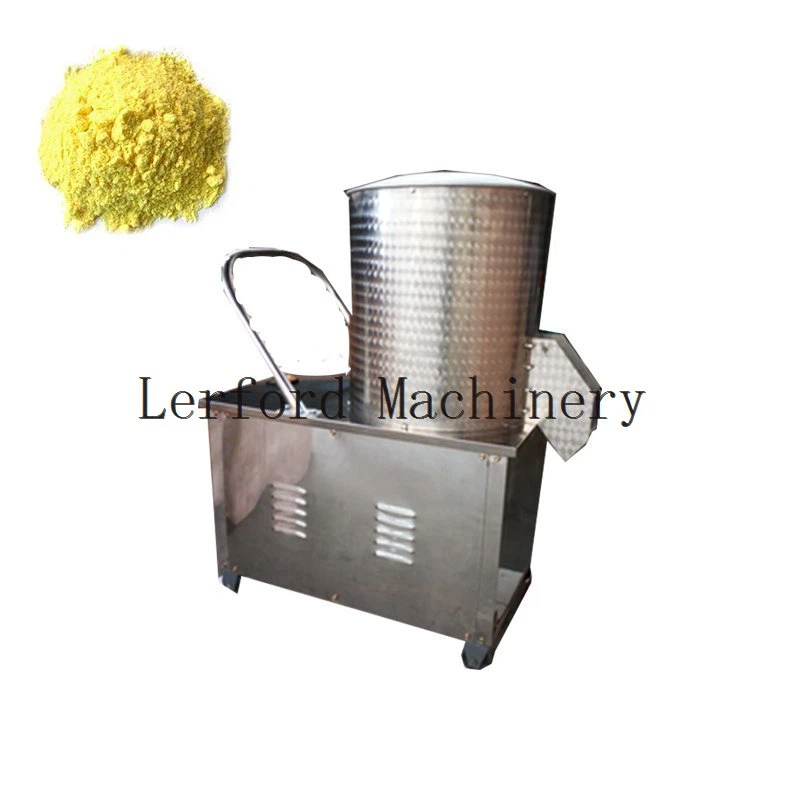
If you’re ready to stop dealing with dust, keep your facility safe, and keep your feed consistent, don’t hesitate to reach out to discuss your specific operation’s needs. We’ll help you match the right grinder and dust control setup for your scale, whether you’re a small family farm or a large commercial feed mill.
Meat and Bone Grinder References:
- OSHA. (2023). Grain Dust Safety Standards. Occupational Safety and Health Administration, U.S. Department of Labor.
- American Society of Agricultural and Biological Engineers. (2021). Engineering Guidelines for Feed Processing Equipment. ASABE Standards.
- Miller, B. (2022). Dust Control in Agricultural Processing Facilities. Journal of Agricultural Safety and Health, 28(3), 217-232.
- National Institute for Occupational Safety and Health. (2021). Control of Respirable Dust in Feed Grinding Operations. NIOSH Publication No. 2021-105.
Zhengzhou Lerford Machinery Equipment Co., Ltd.
Zhengzhou Lerford Machinery Equipment Co., Ltd. is well-known as one of the leading feed grinder manufacturers and suppliers in China, specialized in providing high quality products with low price. Please rest assured to buy high-grade feed grinder for sale here from our factory. Contact us for more details.
Address: No.10th, Yulan Road, High-Tech Industrial Development Zone, Zhengzhou City, Henan Province, China
E-mail: goldenmachinerysusan@gmail.com
WebSite: https://www.lffoodmachine.com/
