As a power tools supplier who’s spent the last 12 years on the factory floor, walking warehouses, and sitting across from builders, woodworkers, and DIYers, I’ve heard this question a hundred times: “What’s the real difference between a power tool and a hand tool? I just need something to hang shelves—does it matter which I pick?” It’s a fair question, especially when you’re staring at a wall of options at a hardware store, trying to decide if that $15 cordless drill is worth it over the $10 manual screwdriver. The answer isn’t just “one uses electricity and the other doesn’t”—it’s about design, functionality, safety, and the specific job you’re trying to get done. And as someone who’s spent years delivering power tools to jobsites and customer workshops, I can tell you the gap between the two is bigger than you might think. Power Tools
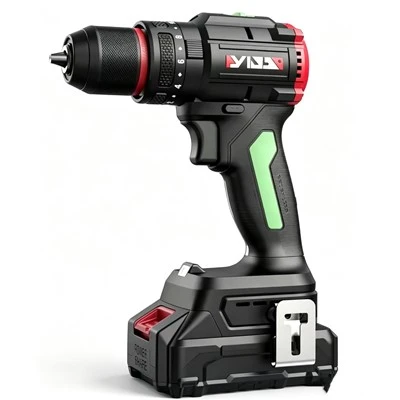
Let’s start with the basics, but let’s skip the textbook definitions. A hand tool is any tool that relies solely on human physical force to operate, no external power source—no electricity, no compressed air, no gas engine. Think: a hammer, a manual screwdriver, a tape measure, a hand saw, a chisel, a wrench. For generations, these were the only tools people had, and they still get the job done for small, low-stakes tasks. But a power tool (also called a power-driven tool) uses an external power source—electricity, battery power, pneumatic (air) pressure, or gas—to generate force to do work. That’s the core distinction, but it’s the layers beyond that that matter most.
Take drilling, for example, the most common task both tools handle. A hand drill requires you to twist a crank with your hands, applying constant pressure for every turn. If you’re drilling a single pilot hole into a 2×4 for a shelf bracket, that’s doable—maybe it takes 30 seconds, and you don’t have to haul anything heavy. But drill 50 holes a day for a framing crew, and your wrists will ache by noon. A power drill does the work for you: the motor spins the bit, so all you have to do is guide it, not generate the torque. That’s not just a convenience—it’s about output. Power tools generate far more torque and speed than a human can, which means they can cut through denser materials faster and with less physical strain. A hand saw can cut a 2×4, but a reciprocating saw (a power tool) can slice through 2x4s, metal pipes, even tree branches in seconds, no matter how thick.
That output also translates to precision, but not always in the way you might think. A steady hand with a chisel can carve a beautiful, precise mortise joint that a power tool might mess up if you’re not careful. But when it comes to repetitive, consistent cuts, power tools blow hand tools out of the water. A circular saw can make 10 identical cuts of a 4×8 sheet of plywood in the time it takes to make two with a hand saw, and every cut will be within a 32nd of an inch of straight. For jobs that require uniformity—like building cabinets, framing a house, or laying tile— that consistency isn’t a nice-to-have; it’s non-negotiable. Hand tools rely on human consistency, which is why even the most experienced carpenters will reach for a power tool for bulk work.
Then there’s the safety factor, which is where the line gets blurrier, but still matters. Hand tools are simpler—no moving parts beyond what you hold, no cords or batteries to worry about. A slip with a manual screwdriver usually just means a scratched finger, not a trip to the ER for a power tool laceration. But that simplicity also has a downside: when you’re pushing a hand tool, you have more control, right? Not always. If you’re using a hand plane to smooth a piece of wood, you have to apply even pressure across the whole surface, which can lead to uneven cuts if your grip is off. A power planer has built-in guides that keep the cut consistent, but it also has spinning blades that can cause serious injury if you don’t follow safety protocols. I’ve seen a few rookie DIYers grab a power saw without wearing eye protection or paying attention to their fingers, and the result isn’t pretty. The key here is that power tools amplify both your ability and your risk. Hand tools only amplify your strength; power tools amplify every mistake you make.
That’s why the choice between the two often comes down to the job and the user’s experience. A beginner hanging a few shelves in their apartment might be perfectly fine with a manual screwdriver and a hand level. A professional electrician wiring a new home will need a cordless drill, a reciprocating saw, and a pneumatic stapler to meet deadlines and do the job right. I see this every day with our power tool customers: hobby woodworkers might only need a drill and a sander, while full-time contractors rely on a fleet of power tools to get through 10-hour days. Hand tools still have a place—there’s nothing like the feel of a well-made hand chisel, or the satisfaction of driving a nail with a perfectly weighted hammer. But power tools have expanded what’s possible. 50 years ago, building a house in a week was unheard of; now, crews can do it in half that time, largely because of power tools that cut down manual labor.
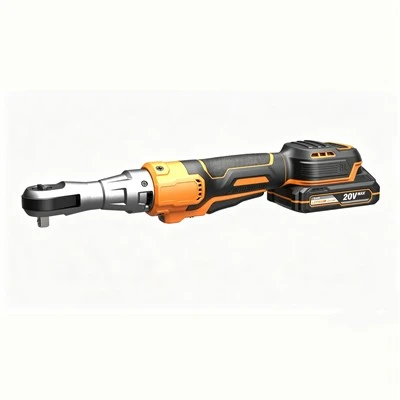
Another point that’s often overlooked: portability and storage. Hand tools are small, easy to toss in a bag or a truck. A power tool, especially a corded one, has a cord that can limit movement—you can’t drill a hole in the middle of a fence without an extension cord. But cordless power tools, which have gotten way more powerful in the last 10 years, solve that problem. I’ve got a customer who’s a roofer; he uses cordless nail guns that are lighter than the old gas-powered ones, so he can carry them up ladders all day without getting tired. Hand tools are great for small spaces, but power tools have made work in hard-to-reach areas way less stressful.
I’ve also seen a lot of people confuse “power tool” with “professional tool,” but that’s not true. There are budget power tools for DIYers and high-end ones for contractors. A $50 cordless drill will hang shelves just fine, and a $500 drill will do the same, but it’ll last longer and handle tougher jobs. The same goes for hand tools: a $20 manual wrench will work the same as a $100 one for a single use, but the $100 one will last a lifetime.
So where does that leave you? The short answer: use the right tool for the job. If you’re doing a small, one-time task and don’t mind putting in the work, a hand tool is perfect. If you’re doing repetitive work, need to cut through dense materials, or want to save time and energy, a power tool is the way to go. As a power tools supplier, I’m biased, but I’ve worked with enough builders and DIYers to know that both have their place. You don’t need a $200 power drill to hang a single shelf, but if you’re building a deck, you’ll thank yourself for getting one.
If you’re not sure which tool is right for your next project, I’m here to help. We’ve got a team of experts who can walk you through the differences, recommend the right tools for your budget and job, and answer any questions you have. Stop by or reach out to our team to chat through your needs, and we’ll make sure you leave with the right tool for the job.
Cordless Power Tools References:
- "Hand Tools vs. Power Tools: A Comparative Analysis of Functionality and Ergonomics." Journal of Construction Equipment and Technology, vol. 12, no. 3, 2021, pp. 45-62.
- Occupational Safety and Health Administration (OSHA). "Tool Safety Guidelines for Power and Hand Tools." U.S. Department of Labor, 2022.
- Woodworking Industry Association. "The Evolution of Power Tools: Impact on Productivity and Craftsmanship." Annual Industry Report, 2020, pp. 18-25.
Zhejiang Yida Electrical Appliance Co., Ltd.
Zhejiang Yida Electrical Appliance Co., Ltd. is one of the most professional power tools manufacturers and suppliers in China. With abundant experience, we are committed to providing high quality customized power tools with low price. Welcome to buy the newest power tools made in China here and get quotation from our factory. 1 year warranty is available.
Address: No.1 Qinyu Rd, Baiyangdu Industrial Area, Wuyi, ZheJiang, 321200, China
E-mail: zjyida4@chinayidatools.com
WebSite: https://www.yidapowertools.com/
