Hey there, let’s cut to the chase—if you’ve ever shopped for a multifunction power meter, you’ve probably seen the price gap: a $50 entry-level model vs. a $500 industrial-grade one, and wondered, “How accurate is the cheap stuff, really?” As a supplier who’s been in this game for over 10 years, I get it. You don’t want to drop big cash on a meter just to find it’s off by enough to mess up your energy bills, production data, or power grid compliance. Let’s break this down without the boring jargon, no fluff, just real talk about low-cost meter accuracy. Multifunction Power Meters
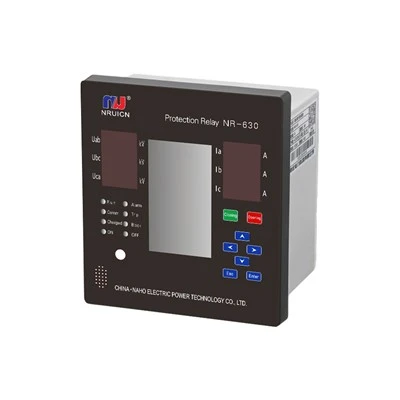
First, let’s define what “low-cost” even means here. We’re not talking about $10 random eBay devices that fall apart after a month—we’re talking about the entry-level multifunction power meters that most small businesses, residential contractors, or light industrial teams reach for. These typically run $40 to $150, way less than the heavy-duty meters for manufacturing or utility work. The big question isn’t “do they have accuracy?”—it’s “what kind of accuracy do you get for that price tag?”
Accuracy in power meters isn’t a single number—it’s a stack of specs, and that’s where a lot of people get tripped up. A meter might say “1% accuracy” but that’s for only current, or only voltage, not the all-important power factor or apparent power calculations that matter for most real-world use. Low-cost models usually cut corners on two key areas to keep prices down: sensor quality and calibration rigor.
Sensors are the heart of a power meter. Cheap entry-level meters often use shunt resistors for current sensing instead of the precision current transformers (CTs) that more expensive models use. Shunts work by measuring voltage drop across a resistor, but they’re way more sensitive to temperature changes. Leave a cheap meter in a hot utility closet, and the shunt’s resistance shifts—your accuracy can swing from 1% off to 5% or worse, no warning. We’ve had customers bring back meters that read 8% low after 6 months of sitting in a poorly ventilated garage; that’s not a defect, that’s the cost of using a low-grade shunt to hit a $60 price point.
Then there’s calibration. Industrial meters get calibrated in a lab against a traceable reference standard (think: $10k+ reference meters) before they leave the factory, sometimes multiple times, to make sure their numbers line up perfectly. Low-cost meters? Most get a one-off calibration in an automated line, maybe done in a hurry, and rarely retested for environmental factors. I remember a 2021 project where a small manufacturing client swapped their old $300 meter for a $70 entry model to track machine energy use. A month later, their energy bills were 12% higher than their meter said they should be. Turns out the cheap meter wasn’t calibrated for the 40°C warehouse temps, so its current reading was off—they were paying the utility for energy their meter never recorded. Oops.
But here’s the thing: “low accuracy” doesn’t mean “useless.” It all depends on what you’re using the meter for. If you’re a residential electrician checking a home’s panel to spot a blown circuit—you don’t need a meter that’s accurate to 0.1%. A low-cost meter with ±2% accuracy is totally enough here. Even small contractors doing routine site checks, like confirming a generator output before a job, can get away with entry-level models. Where accuracy becomes a problem is when you’re using the meter for decision-making that affects your bottom line: energy management, billing between departments in a commercial building, or verifying compliance with local power codes. For that, you need a meter with at least ±0.5% accuracy, which is where the mid-range starts.
Wait, let’s talk about common myths. A lot of people assume “multifunction” means good accuracy, but no—multifunction just means the meter does more than just measure voltage. A low-cost multifunction meter might have the extra screens for power factor, frequency, and total harmonic distortion (THD) but skimp on the sensors to keep the price low. THD is a big one: if you’re running a lot of LED lights or variable frequency drives (VFDs), THD can spike, and low-cost meters often miscalculate THD by 10% or more, which throws off your power factor readings. That’s not a big deal for a home, but if you’re a restaurant with 20 LED units, a bad power factor reading could mean you’re missing out on utility rebates for energy efficiency.
Another myth: “warranty = accuracy.” Some cheap meters come with a 1-year warranty, but that doesn’t mean they’re calibrated to hold their accuracy over time. We had a customer who bought a $90 meter for their small office; after 2 years, it was reading voltage 4% high. The warranty covered a replacement, but they lost 2 years of data on their energy usage, so they couldn’t prove they were wasting power on old equipment. Compare that to a mid-range meter we sell, which has a 5-year warranty and accuracy stability up to 10 years—you’re paying more upfront, but you don’t have to worry about re-calibrating every year or losing data.
So where does the line get drawn? Let’s break it down by use case to make it easy:
- Light use (residential, small home projects): Low-cost meters ($40–$80) usually have ±2–3% accuracy on voltage and current, ±3–5% on power. This is totally fine for checking basic circuits, testing battery banks, or DIY energy tracking for your home. Just don’t use it to pay your utility bill based on it—double-check with a $20 multimeter if you’re unsure.
- Medium use (small commercial, light industrial): If you’re tracking energy for a retail store’s lighting, or testing small motors, go for the mid-range multifunction meters ($120–$250). These use better CTs, get calibrated for temperature, and hit ±1% accuracy on power. They’re accurate enough to get small energy rebates and avoid billing disputes between departments.
- Heavy use (manufacturing, utilities, compliance): You need industrial-grade meters ($300+), which have ±0.2–0.5% accuracy, traceable calibration, and can handle harsh environments. These will pay for themselves fast if you’re using them to optimize machine efficiency or meet grid requirements.
Now, let’s talk about what makes a low-cost meter not just “accurate enough” but actually reliable. Not all cheap meters are equal, right? As a supplier, we have a filter: if a low-cost meter has calibration that’s NIST-traceable (meaning it’s aligned with national standards), and its sensors are rated for a wider temperature range (-10°C to 50°C, not just 0°C to 40°C), it’s way better than the random stuff on Amazon. We also test every low-cost meter we sell before shipping—our customers hate getting a dud that’s off by more than 3% right out of the box. That’s a thing people don’t always mention: a “low-cost” meter from a reputable supplier will have way more consistent accuracy than a no-name one from a random website.
I’ll give you a real example from last year: a landscaping company bought 12 cheap multifunction meters to track their truck chargers and workshop tools. They initially went for a $40 no-name model, but after 3 meters came back with 7% current error, they switched to our $70 entry model. The difference? Our meters use a better shunt with temperature compensation, so their accuracy stayed within ±2% even in the hot truck garage. They saved $30 per meter, and avoided the hassle of replacing half their units 3 months later.
The big takeaway here is that accuracy isn’t a one-size-fits-all number, and low-cost multifunction power meters have a place—just not for every job. If you’re only using a meter for quick checks, the cheap stuff works. If you’re using it to make important decisions, save data long-term, or get rebates, you’ll need to spend a little more.
Wait, let’s address the elephant in the room: why don’t all low-cost meters just have good accuracy? Because precision costs money. The shunts, calibration equipment, and quality control for accurate meters add up. You can’t sell a meter for $50 and have all the lab testing and high-grade sensors that a $500 meter has. That’s not a rip-off—that’s just how component pricing works. You get what you pay for, even in power meters.
If you’re currently in the market, here’s a quick tip: check the spec sheet for “total error” vs. “error at rated conditions.” A lot of cheap meters will list a small error number at 25°C (room temp) but won’t mention that it doubles at higher or lower temps. That’s a red flag. Reputable suppliers will be upfront about their accuracy across the operating temperature range.
At the end of the day, the worst thing you can do is pick a meter based only on price. We’ve seen so many people buy the cheapest one, run into accuracy issues, and then spend more to replace it than they would have if they’d gotten the right meter the first time. Whether you’re a small business owner, an electrician, or a facilities manager, your meter is only as good as the accuracy you can trust.
If you’ve got questions about what meter fits your needs, or you want to test a sample before ordering, hit us up to talk through your use case. We don’t do hard sells—we just want to make sure you get a meter that works for you, no guessing games.
VT Supervision Relays References:
- International Electrotechnical Commission (IEC). “Electrical Measuring Equipment – Performance Requirements for Meters for Active Energy.” IEC 62053-21, 2017.
- National Institute of Standards and Technology (NIST). “Calibration Requirements for Electrical Measurement Instruments.” NIST Handbook 130, 2020.
- Energy Star. “Guidelines for Commercial Energy Monitoring Equipment Accuracy.” U.S. Environmental Protection Agency, 2022.
- IEEE. “Standard for Precision Power Measurement and Analysis.” IEEE Std. 1459-2010, 2010.
NAHO Electric Power Technology Co., Ltd.
NAHO Electric Power Technology Co., Ltd. is one of the most experienced multifunction power meters manufacturers and suppliers in China, also supports customized service and OEM&ODM service. Welcome to wholesale CE approved multifunction power meters in stock here and get quotation from our factory. Quality products and reasonable price are available.
Address: No.15 Zhengtai Road, Xinguang Industrial Zone, Liushi Town, Yueqing City, Zhejiang Province, P.R.China
E-mail: Dr502963156@gmail.com
WebSite: https://www.nahopower.com/
