Hey there, fellow DIYers, homeowners, and anyone who’s ever stared at a wonky barn door in a friend’s house and thought, “Wait, could that actually work?” Today we’re diving into one of the most common questions I get as a barn door supplier—probably the question I’ve answered 100+ times in the last year alone: Can you trim a barn door? Barn Door
First off, let’s cut to the chase. Yes, you can. But before you grab your circular saw or trim router and start hacking away at that beautiful solid wood door you just ordered from us, let’s talk about the fine print. Because if you skip this part, you’re gonna end up with a door that doesn’t slide right, looks like a hot mess, or worst case, falls off the track. And trust me, I’ve seen all three happen. I once had a customer bring a door back last month that he’d trimmed 2 inches off the bottom, and it was so warped from the cut that it wouldn’t close all the way. He’d used a regular hand saw and didn’t seal the edge, so the wood absorbed moisture and twisted faster than a pretzel at a fair. Lesson number one: trimming a barn door isn’t just “cutting wood shorter.” It needs to be done the right way, especially if you’re dealing with solid wood, MDF, or any of the materials we supply doors in.
Let’s start with why you’d even want to trim a barn door in the first place. Most of the time, it’s about fitting. You measured your doorway, ordered a door that was supposed to be 36 inches wide, 80 inches tall, and turns out your actual doorway is 78.5 inches tall—so you’re half an inch too short, which means there’s a gap that looks weird, or you hit the floor when you slide it. Or maybe you ordered a door that’s a little too wide for the track you installed because you miscalculated the track overhang. Those are super common, I get it. We’ve all been there, making a quick measurement and forgetting to account for the trim on the doorway itself.
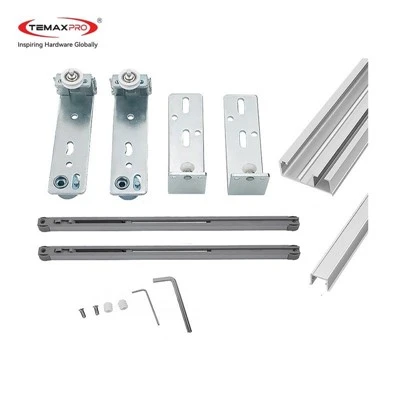
But here’s the thing: not all parts of the barn door are created equal. Let’s break down which parts you can trim, and which you absolutely can’t. First, the height. Trimming the height is usually what people need most. The top of the door is where the hangers attach—those little metal brackets that hook onto the track. You CANNOT trim the top of the door. Why? Because the hangers are pre-installed (or if you order a raw door, the hanger holes are pre-drilled at a specific distance from the top edge). If you cut the top, you’ll either shorten that distance so the door doesn’t hang level, or you’ll accidentally cut into the hole where the hanger sits, making it unsafe. The only parts you can trim for height are the BOTTOM of the door, and the sides. Got it? Top is off limits.
Wait, let’s confirm that. A customer last year tried trimming the top of his door because he thought it would be easier, and when he hung it, the left hanger was 1 inch lower than the right, so the door tilted like a seesaw. He spent $200 on adjustment tools trying to fix it, and ended up just buying a new door. So yeah, top is a no-go.
Now, trimming the sides for width. That’s doable, but again, caveats. Most barn doors—especially the solid pine, oak, or maple ones we sell—have a wood grain that runs along the length (height) of the door. The sides are just the ends of the planks, so cutting those is fine as long as you do it straight and seal the edge. But if you have a laminated door, like MDF or plywood with a veneer finish, you have to be extra careful. MDF is super prone to chipping, so if you trim the side, you’ll need a fine-tooth blade on your saw, and you might want to sand the edge after to smooth it. Veneer doors can also peel if you cut too aggressively, so take it slow.
Trimming the bottom is where most mistakes happen too. Like I said earlier, don’t just hack at it with a regular hand saw. First, you need to figure out exactly how much to trim. Measure the gap between the bottom of the un-hung door and the floor, or the top of your baseboard. I always recommend leaving a 1/2 inch to 3/4 inch gap. Why? Because if the door drags on the floor when it slides, it will scratch the floor, get stuck, and the hangers will wear out way faster. Plus, that gap looks intentional, not like you messed up the size. If you leave too much gap, it looks weird—like you left a space for a kid to crawl through, so 1/2 to 3/4 inch is the sweet spot.
Now, the big question: what tools do you actually need to trim a barn door the right way? I’ve seen guys use a $20 hand saw and mess up a $300 solid wood door, so trust me, tools matter. First, a circular saw is your best bet here, but only if you have a straight edge guide. Clamp a long level or a straight board to the door so your saw doesn’t veer off the line. If you don’t have a circular saw, a jigsaw with a fine-tooth blade works, too—just take your time, go slow. For trimming sides, a router with a straight bit or a table saw is ideal, but if you’re a beginner, a circular saw with a straight edge is way easier to handle.
Then, the after-cut steps. This is the part most people skip, and it’s why their door warps or looks unfinished. Whenever you cut wood, you expose raw edges. If it’s solid wood, the raw edge will absorb moisture from the air, especially if you live in a humid place like Florida or the Pacific Northwest, and that will make it twist or cup, which ruins the door’s shape. For stained or natural doors, you need to sand the raw edge smooth, then seal it with a wood sealer, stain, or even polyurethane, just like you did the rest of the door. For painted doors, sand the raw edge, then touch up the paint so it matches the rest of the door. If you skip this, within a few months that cut edge will start to look dull, and the wood might warp so bad your door won’t slide at all. I’ve had multiple customers come back saying their trimmed door started sticking after 6 months, and the first thing I check is if they sealed the edge. 9 times out of 10, they didn’t.
Wait, what if your door is solid wood vs. veneer vs. MDF? Let’s break that down by material, because that changes things. Solid wood doors (pine, oak, cedar) are the most forgiving when trimming, as long as you seal the edge. We sell a lot of solid pine barn doors, and we get calls all the time from people trimming them—just make sure you use a sharp blade, cut straight, and seal the edge. Veneer doors (like our medium-density fiberboard with oak or walnut veneer) are trickier because the veneer is thin. If you use a too-coarse blade, you’ll chip the veneer on the face of the door, so always use a fine-tooth blade (like 80 teeth or more) when cutting veneer. And don’t sand the edge too hard, because you might sand through the veneer, exposing the raw MDF. For MDF doors, even more care—MDF is super dense, so it can chip easily, and it absorbs water way faster than solid wood, so sealing the edge is non-negotiable. If you get a water spill on the raw MDF edge, it will swell and warp in 24 hours.
Now, what about the weight? Wait, does trimming affect the door’s weight? For most people, if you’re trimming less than an inch or so, it’s not a big deal. But if you’re trimming 2 or 3 inches off a solid wood door, that will make it lighter. Is that a problem? Not really, as long as you’re using the right hangers. All the door hardware we sell is rated for the exact weight of the doors we supply, so even if you trim off an inch or two, the hangers will handle it. If you’re trimming more than 3 inches, though, you might want to check the weight rating of your track and hangers, just to be safe. But that’s a rare case—most people only need to trim a half inch to an inch, so weight isn’t an issue.
Wait, let’s address the “should I do it myself or hire a pro?” question. If you’re comfortable with basic DIY, have the right tools, and take your time, you can definitely trim a barn door yourself. I’ve had my 19-year-old cousin trim his own barn door last year, and it worked out great. But if you’re not comfortable using power tools, or you’re worried about messing up a expensive solid wood door, hiring a handyman for $50-$100 is totally worth it. Way better than ruining a $300 door and having to buy a new one.
Now, let’s talk about common mistakes to avoid, because I’ve seen every single one. First, measuring wrong. Don’t just hold a tape measure up to the door and guess. Measure twice, mark your cut line with a pencil (light, so it doesn’t show), then double check that line before you cut. I once had a customer mark a cut line, cut, and realized he measured from the wrong end, so he cut 2 inches too much off the bottom. Now he has a door that’s too short and a useless extra 2 inches of solid wood. Oops. Second, not using a straight edge. Cutting freehand with a circular saw or jigsaw is a recipe for a wobbly cut. Clamp that straight board down, trust me. Third, forgetting to seal the edge. Like I said, this is the #1 mistake, and it’s the easiest to fix. Fourth, trimming the top of the door. We already covered that, but it bears repeating—don’t do it.
Wait, what if you have a double barn door? Does trimming a double door work the same? Yep, same rules apply. Just make sure both doors are trimmed evenly, so they line up when closed. Measure the gap between the two doors, mark both cuts, double check, and cut. And don’t forget to seal both edges of each door that you trimmed, since both sides are exposed.
Now, let’s get to when you should NOT trim a barn door. Is there a time when you just need to return it and order a new one? Absolutely. If you ordered a door that’s 2 inches too short, don’t trim 2 inches off the bottom—that will leave a huge gap that looks ridiculous. For gaps that are more than 1 inch, you’re better off returning the door and getting a custom size, or adjusting the track height instead. Wait, that’s another trick! If your door is a little too short, you don’t have to trim it. You can install the track higher on the wall, so the door hangs higher, reducing the gap at the bottom. That’s way easier than trimming, and it avoids all the sealing and warping issues. I tell that to every customer who calls with a door that’s slightly too short—adjust the track first, then only trim if that doesn’t work.
Another time not to trim: if your door has a pattern or design on it, like the ones with the glass panels or the cutout shapes. Trimming around the design will mess it up, obviously. Those doors are made with specific dimensions to fit their designs, so if it’s the wrong size, return it or adjust the track, don’t cut.
Now, a quick story to wrap this up. Last month, a guy named Mike came in to the warehouse (wait, yeah, I run the warehouse for our barn door supply business, so I see this all the time) panicking because he’d ordered a 36×80 solid oak door, and his doorway turned out to be 79 inches tall, so the door was too short. He was ready to cut 1 inch off the bottom, and was already grabbing a circular saw from his truck. I stopped him, told him about adjusting the track. We went out to his house, and in 10 minutes we unhooked the track, moved it 1 inch higher on the wall, re-hung the door, and it fit perfectly, no cutting needed. He ended up saving $150 in tools and the risk of ruining his new door. That’s the kind of thing I love helping with—little tricks that save people time and money.
At the end of the day, trimming a barn door is totally possible, but it’s not a “wing it” job. You need to know what parts to cut, what tools to use, and the critical step of sealing the edge to prevent warping. If you’re unsure, hit us up—we’re here to help, whether you need to confirm if trimming is right for your door, or want to order a custom size that fits perfectly so you don’t have to cut at all.
If you’re in the market for a barn door, need help sizing one that fits your space, or have questions about trimming, our team is ready to chat with you. Don’t guess on measurements or cuts—let us point you in the right direction to get a barn door that works perfectly for your home.
Handle Door Lock References:
- Wood Handbook: Wood as an Engineering Material. U.S. Department of Agriculture, Forest Service, 2010.
- Barn Door Installation and Adjustment Guide. National Home Improvement Association, 2022.
- Moisture Effects on Solid Wood and Composite Door Materials. Journal of Architectural Woodwork, 2021.
Shanghai Temax Hardware Co., Ltd.
As one of the most professional barn door manufacturers and suppliers in China, we’re featured by quality products and good service. Please rest assured to buy bulk customized barn door at competitive price from our factory. Welcome to contact us for quotation.
Address: Room 411, Building A, No.508 Chundong Rd.,Shanghai,China
E-mail: info2@shtemax.com
WebSite: https://www.shtemax.com/
