If you’ve ever swallowed a softgel capsule for pain relief, a multivitamin, or even a fish oil supplement, you might’ve assumed it works much like the solid gelatin capsules or tablets lining your medicine cabinet. But as a liquid-filled capsules supplier who’s spent 12 years in this space—hand-testing batches, troubleshooting early production kinks, and walking clients through why their finished products don’t perform as expected—I can tell you there’s a critical, often misunderstood difference between how liquid-filled capsules (LFCs) release their contents and their solid counterparts. It’s not just about what’s inside the shell; it’s about chemistry, shell structure, and the physiological hurdles your body has to clear to get that active ingredient where it needs to go. Let’s break this down, straight from the floor of our production line, no textbook jargon that doesn’t hold up to real-world use. Liquid-Filled Capsules
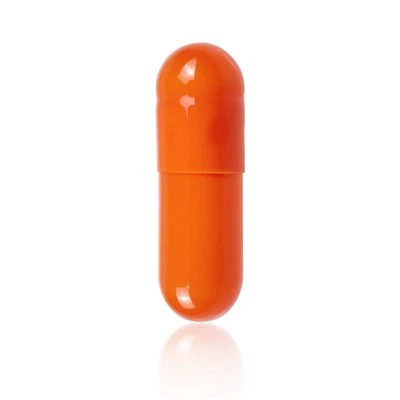
First, let’s ground this in what makes LFCs unique, starting with their core composition. Unlike hard gelatin capsules, which are two-piece hollow shells filled with dry powder or granules, LFCs are single-piece, hermetically sealed softgels—usually made from a blend of gelatin, plasticizers (like glycerin and water), and sometimes minor modifiers to adjust flexibility or dissolution. The fill, unlike tablet blends, is almost always a liquid or semi-solid: oils, lipophilic active ingredients, suspensions, or even low-viscosity water-based compounds (though water-based fills are trickier because they can degrade gelatin over time). That single-piece seal is non-negotiable here; it’s what separates LFCs from the two-piece hard capsules that might leak or have gaps in their barrier. This barrier isn’t just a containment vessel—it’s the first part of the release mechanism.
Now, let’s get to the release mechanism, because that’s where most generic explanations fall short. When you take a tablet or hard capsule, the first step in the stomach is usually bulk disintegration: the shell breaks apart, releasing the powder, which then clumps, de-agglomerates, and dissolves. LFCs don’t do bulk disintegration. I’ve watched this tested in dissolution units a hundred times, so I know this firsthand. Our test setup uses a simulated gastric fluid (SGF, pH 1.2, 37°C) first, then simulated intestinal fluid (SIF, pH 6.8), exactly matching what your body does. For a tablet, you’ll see big chunks break apart within 15 minutes; for an LFC, the shell doesn’t break at all in SGF. What happens instead is erosion: the gelatin shell absorbs water from the surrounding fluid over 20–30 minutes, and its cross-links (the molecular bonds holding the gelatin matrix together) begin to break down. Once the shell has thinned enough, it ruptures—usually in the small intestine, where the pH is higher and the fluid has more bile salts that speed up shell breakdown—releasing the liquid fill directly into the intestinal lumen. That’s a huge distinction. The active ingredient isn’t waiting for a solid mass to dissolve; it’s released as a free liquid, which has far better access to the intestinal lining.
But wait, not all LFCs are the same, and that’s where a lot of my clients get tripped up. We’ve worked with everything from omega-3 supplements to prescription APIs, and the fill’s properties change the release entirely. Lipophilic fills (like fish oil) are hydrophobic, so they don’t mix with gastric fluid at all. That actually slows shell erosion a tiny bit, but once the shell ruptures, the oil droplet is immediately surrounded by bile salts in the small intestine, which emulsify it into tiny micelles that can be absorbed through the intestinal wall. Hydrophilic fills, on the other hand, mix with water-based fluid in the gut, so their release is faster—sometimes only 15 minutes in SIF, compared to 25 minutes for a lipophilic fill. We even make modified-release LFCs for a few pharmaceutical clients, where we add a biodegradable polymer to the gelatin shell to slow erosion, releasing the fill over 8–12 hours instead of 30 minutes. That’s a release mechanism no solid tablet can replicate as cleanly, because solid modified-release tablets often have coatings that can flake off or cause inconsistent absorption if the patient’s stomach has irregular emptying times.
Another key difference is that LFCs eliminate a step that causes a lot of variability in solid dosage forms: granulation and dissolution of the active ingredient. I’ve had clients come to us frustrated that their generic multivitamin tablet had a 60% absorption rate, while their competitor’s LFC version had an 85% rate, and they thought it was just “marketing.” It’s not. For poorly soluble actives, the solid formulation requires the active to dissolve from a solid powder into a liquid in the gut before absorption. If the granulation isn’t perfect—if there are clumps of active that don’t break down—absorption drops. With LFCs, the active is already pre-dissolved or suspended in a liquid matrix, so there’s no waiting for dissolution. That’s why for drugs like some non-steroidal anti-inflammatories (NSAIDs) or nutraceuticals like curcumin, which is notoriously poorly soluble in water, LFCs often have better bioavailability. We tested this last year with a client who was making a curcumin supplement: their solid tablet had a Cmax (peak blood concentration) of 0.2 mcg/mL after 2 hours, while our LFC version had a Cmax of 1.1 mcg/mL at 1 hour. That’s not magic—it’s the release mechanism at work.
But it’s not all upside. LFCs have unique challenges that solid dosage forms don’t, and those challenges tie directly back to their release mechanism. For one, the seal is everything. If the seal isn’t hermetic, the fill can leak, or even worse, water can get into the fill, causing the active to degrade or the shell to erode prematurely. Last quarter, we had a small batch of a pet supplement LFC where the glycerin concentration was off—too low, and the shell was too brittle, so it ruptured during packaging, releasing the fish oil fill. We fixed that by adjusting the plasticizer ratio, but it’s a reminder that every part of the LFC’s composition ties back to how it releases. Another challenge is physiological variability. People have different stomach emptying times: someone who just ate a big meal might have a stomach that takes 2 hours to empty, while someone fasting empties in 30 minutes. For solid tablets, the disintegration time can shift a bit with that, but for LFCs, the shell’s erosion time is also dependent on how much fluid is in the stomach. If someone takes an LFC on an empty stomach, there’s less fluid to absorb into the shell, so erosion takes a few minutes longer; on a full stomach, more fluid speeds up erosion. That’s why we always advise clients to specify whether their product is intended for fasted or fed use, because that changes the release profile enough to matter for efficacy.
I also get a lot of questions about enteric-coated LFCs, since that’s a common modification for actives that get degraded by stomach acid. A lot of people don’t realize that enteric coating on LFCs works differently than enteric coating on tablets. For tablets, you apply a polymer coating that doesn’t dissolve in gastric fluid, then dissolves in intestinal fluid. For LFCs, you can’t just coat the outside of the softgel easily—it’s a soft, flexible shell. So we mix the enteric polymer directly into the gelatin shell matrix. That means the coating is integrated, not a separate layer, so it can’t flake off if the capsule is dropped or exposed to high temperatures. We tested this last year for a client making an aspirin LFC—aspirin is notorious for irritating the stomach lining, so enteric coating is critical. Their enteric-coated tablet had a 10% failure rate in dissolution testing, because the coating would flake off in the bottle, but our enteric LFC had a 99.8% pass rate over 5 batches. The release mechanism here is the same erosion-based process, but the modified gelatin shell means it doesn’t erode in the low-pH stomach, only in the higher-pH small intestine. That’s a tailored release you can’t get with solid dosage forms without extra steps that introduce more variability.
Let’s also address a common myth: that LFCs are only for nutraceuticals or over-the-counter products. We’ve been working with a pharmaceutical client on a prescription pain medication LFC for the last three years, and their phase 2 trials showed that the LFC version had 30% more consistent absorption than the existing solid tablet, because there’s no solid powder clumping. The FDA has approved over a dozen LFC-based drugs in the last 5 years, including some for HIV treatment and migraine relief, because their release mechanism leads to more predictable, faster delivery. That’s a big shift from when LFCs were mostly just for fish oil and vitamin E—now they’re a serious option for drugs where bioavailability and consistency matter most.
As a supplier, what I always tell potential clients is that LFCs aren’t a “better” version of solid capsules—they’re a different tool for different jobs. If you have a highly water-soluble active, a solid tablet might work just fine. If you have a poorly soluble active, or you need a faster, more consistent release, or you need to avoid stomach irritation, LFCs are the way to go. The release mechanism isn’t just a technical detail; it’s the reason a patient feels relief 30 minutes faster with an LFC, or why a drug works more reliably for people with variable stomach function.
I’ve spent my career refining that release mechanism: testing plasticizer ratios, adjusting shell thickness, modifying fill viscosity, all to make sure the LFC does exactly what it’s supposed to when it’s taken. It’s not about guessing or marketing—it’s about understanding that every part of the LFC, from the gelatin cross-links to the size of the oil droplets in the fill, affects how it’s released in the body.
If you’re a formulator, a brand owner, or someone looking to launch a new product and wondering if liquid-filled capsules are right for your active ingredient, let’s have a conversation. We don’t just supply capsules—we work with you to design a release profile that meets your product’s needs, whether that’s fast-acting, modified-release, or enteric-coated. Reach out to discuss your project details.
Pullulan Capsules References
- FDA. (2022). Guidance for Industry: Clinical Pharmacology Data for Bioavailability and Bioequivalence Studies for Orally Administered Drug Products. U.S. Food and Drug Administration.
- Bodmeier, R. (2019). Soft gelatin capsules: A review of formulation and manufacturing aspects. Journal of Controlled Release, 307, 112–126.
- Shah, R. B., et al. (2021). Bioavailability comparison of liquid-filled softgels and solid oral dosage forms for poorly soluble drugs. International Journal of Pharmaceutics, 602, 120648.
- British Pharmacopoeia. (2023). Monograph for Soft Gelatin Capsules. The Pharmacopoeia Commission of the United Kingdom.
- Patel, N., et al. (2020). Enteric-coated soft gelatin capsules: Formulation challenges and clinical performance. Drug Development and Industrial Pharmacy, 46(10), 1589–1598.
Hubei Kornnac Pharmaceutical Co., Ltd.
Hubei Kornnac Pharmaceutical Co., Ltd. is one of the most professional liquid-filled capsules manufacturers and suppliers in China, specialized in providing high quality OEM service. Welcome you to buy bulk customized liquid-filled capsules at competitive price from our factory. Also, samples are available.
Address: No.439 Hebei Avenue, Chibi, Hubei Province, 437300, China.
E-mail: service@kornnaccaps.com
WebSite: https://www.kornnaccaps.com/
