Hey there! If you’ve ever been on the hunt for granite slabs, you know how game-changing they are for kitchens, bathrooms, or even statement accent walls. But let’s be real—walking into a stone supplier’s warehouse and seeing row after row of granite can feel a little overwhelming. One of the first questions I get from new customers is, “What colors do granite slabs even come in?” As someone who’s been supplying granite slabs for over 10 years, I’m here to break it down like we’re chatting over coffee (no stuffy jargon, promise). Granite Slabs

First off, granite isn’t just “the gray stone” you see in generic kitchen displays. It’s an igneous rock that forms when magma cools slowly under the Earth’s crust, and that slow cooling lets different minerals mix in—quartz, feldspar, mica, even tiny bits of iron or hornblende. Those minerals are what give granite its color palette. Think of it like baking cookies: add chocolate chips (quartz) for sparkle, a little vanilla (feldspar) for base color, and some butterscotch bits (mica) for depth. Change the ratio of those ingredients, and you get a totally different cookie—same idea with granite.
Let’s start with the most popular shades you’ll see on job sites and home renovations right now, because let’s be honest, that’s what most folks actually care about.
First up: gray granite. This is the big one, and it’s not just one shade. You’ve got light gray granite, which is super popular for modern kitchens because it feels bright and doesn’t clash with light cabinetry. A lot of light gray granite has subtle white or even pale blue flecks from quartz—wait, no, let’s get specific: it’s the feldspar here that makes the base light gray, and quartz adds those frosty specks. Then there’s medium gray, which is workhorse material—durable, doesn’t show small stains as much, and works with almost any design vibe. Dark gray granite (sometimes called charcoal granite) is the bold choice for people who want a sleek, luxurious look. It has deep, almost black bases, with tiny silver or gold mica flecks that catch the light when your kitchen is lit up. I’ve sold tons of dark gray slabs for hotel lobbies lately—they hold up to high foot traffic and look amazing.
Next, brown granite. This is the warm, cozy cousin that’s perfect for traditional or rustic homes. Brown comes from iron oxide (rust, basically) in the rock—so if you see a granite slab with rich tan or chocolatey brown streaks, that’s iron doing its thing. There’s the classic “golden brown” granite, which has flecks of gold and cream mixed in—great if you have oak cabinets, because it ties that warm wood tone together. Then there’s reddish-brown granite, which is a little bolder; it has deep terracotta or rusty undertones. I once did a kitchen with a reddish-brown granite countertop and soft white cabinets, and the client said it felt like a warm hug every time she walked in. That’s the fun part about granite—each slab is one of a kind, so even if it’s “brown,” no two are identical.
Wait, can we talk about black granite? A lot of people group dark gray and black together, but black granite is usually deeper, with less visible flecks (though some have tiny silver specks you have to get close to see). It’s super smooth-looking, which is why it’s popular for bathroom vanities—makes the space feel like a spa. I should mention here: sometimes you’ll hear “black granite” confused with another stone, but real granite has that mineral mix, so if a slab is truly black, it’s got those tiny mineral grains. Our customers love black granite for minimalist designs because it doesn’t have a busy pattern, so it keeps the focus on your hardware or backsplash.
Now, for the unexpected colors—because granite can do more than neutrals, I promise. Blue granite is a head-turner. It’s not neon blue, obviously; it’s that soft, dusty blue-gray, with flecks of blue that pop in natural light. That blue comes from amphibole minerals, which are a type of silicate. I had a customer last year who used a blue granite slab for her kitchen island, and she paired it with matte black hardware—total showstopper. Then there’s green granite, which has a muted, earthy green tone from hornblende or chlorite. It’s great for outdoor kitchens because it weathered really well, so if you’re doing a patio bar or grill station, green granite is a solid pick.
Wait, what about white granite? A lot of people think white granite is just white marble, but no—granite is way more durable than marble, so it’s perfect for kitchens. White granite has a pale, off-white base, with tiny gray or black flecks (usually biotite, which is a dark mica) that add a little texture. The key with white granite is that it’s not as porous as marble, so you don’t have to seal it as often. I always tell customers: if you want the bright look of marble but don’t want to deal with the high maintenance, go for white granite. It’s a close second, but way tougher.
Now, let’s talk about pattern, because color isn’t just the base—those specks, streaks, and veining are part of the “color story” too. Some granite slabs are “splotchy,” meaning the minerals are spread out in random, patchy ways. Others are “linear,” with thin, straight streaks that look like they were painted on. And then there are the “speckled” ones, which are full of tiny, uniform flecks. I once had a customer who wanted a linear granite for her hallway floor—she loved how the straight streaks made the space feel longer. Another client wanted a speckled granite for her laundry room, because the small flecks hid any dirt or water spots that might pop up.
Wait, a quick note about where color variations come from—no two granite slabs from the same quarry are exactly the same. That’s one of the best things about granite, right? So even if you pick a “light gray” granite slab from a batch, the next slab might have a few more white flecks, or a little more charcoal in the base. I always tell customers: come see the slabs in person, if you can. A photo on a website can’t capture how the light hits the tiny mineral grains, which is what makes it sparkle. That’s why my team sets up a showroom where you can flip through different slabs—we even have samples you can take home to hold up against your cabinetry or paint, so you know it’ll match.
Let me also clear up a common myth: people think all granite is the same, but it totally isn’t. The color can change based on which quarry it’s from. For example, granite from Brazil often has more warm brown and gold tones, while granite from India tends to have deeper blacks and charcoals. We source our slabs from trusted quarries all over the world, so we’ve got a huge range—from the classic Italian gray granite to the exotic blue granite from Madagascar. That variety is what keeps my customers coming back; they know they can find something that fits their exact style, not just the pre-made stuff big-box stores carry.
Now, why does color matter for your space? It’s not just aesthetics—color can affect how the whole room feels. A light gray granite will make a small kitchen feel bigger, because it reflects more light. A dark brown or black granite will make a large, open kitchen feel cozier, like a gathering spot. A blue or green granite adds a pop of color without being too loud, which is perfect if you don’t want to repaint your whole room but want a statement piece. I had a customer who was nervous about a blue granite at first, but once she saw it next to her soft yellow walls, it was exactly the contrast she wanted—no more boring, neutral only spaces.
Wait, should I mention maintenance briefly? A lot of people ask, “Does color affect how much I have to clean it?” Not really. Most granite is sealed once a year, regardless of color, so stains from coffee or wine will show up on light or dark slabs if you don’t seal them. The only exception is white granite—since it’s lighter, it might show tiny spills more easily, but sealing it fixes that. I always give customers a quick care guide when they pick up their slabs, so they know how to keep their granite looking good.
So, to wrap this up: granite slabs come in way more colors than you probably realized—from light grays and warm browns to bold blues and soft greens, plus all the in-between shades. Each color comes from different minerals in the rock, and each slab is unique, so no two will be exactly alike. That’s what makes granite so special—it’s not a manufactured product; it’s a piece of the Earth, shaped over millions of years.
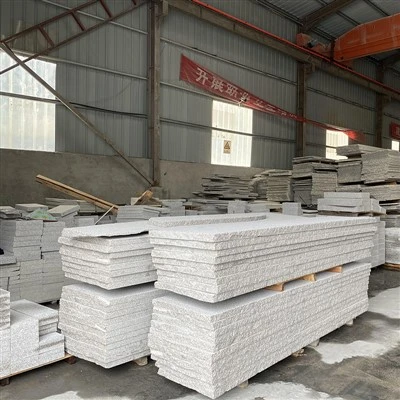
If you’re in the market for granite slabs, whether it’s for a kitchen counter, bathroom vanity, outdoor kitchen, or accent wall, don’t hesitate to reach out. My team can show you our full range of colors, help you pick the right one for your space, and answer any questions you have about sourcing or installation. We work with homeowners, contractors, and designers, so no job is too big or too small. Just send a message to our team, and we’ll get back to you right away to set up a time to view slabs or chat through your needs.
Granite Slabs References:
- "The Geology of Granite: Mineral Composition and Color Variations" – Geological Society of America, 2022
- "Choosing Granite for Residential Spaces: Color Trends and Applications" – National Association of Home Builders, 2021
- "Minerals in Igneous Rocks: How They Shape Stone Appearance" – University of California, Berkeley Department of Geosciences, 2020
Suichang Yongheng Stone Industry Co., Ltd.
With abundant experience, we are one of the most professional granite slabs manufacturers and suppliers in China. We warmly welcome you to wholesale premium granite slabs in stock here and get quotation from our factory. We also accept customized orders.
Address: Liantou Stone Industrial Park, Yunfeng Street, Suichang County, Lishui City, Zhejiang Province
E-mail: m13567645214@163.com
WebSite: https://www.yonghengstone.com/
