If you’re in the manufacturing space—whether you’re building automotive components, consumer electronics, medical devices, or even industrial machinery—you’ve probably heard the phrase “testing is non-negotiable” so many times it might feel like a cliché. But let’s cut to the truth: most production teams spend 90% of their time designing, fabricating, and assembling products, and barely 10% validating those products before they leave the shop floor. That’s a mistake. Let me tell you from 15 years of running a rear testing production line supply business that that imbalance is what leads to costly product recalls, brand damage, and even life-threatening safety risks. Rear Testing Production Line
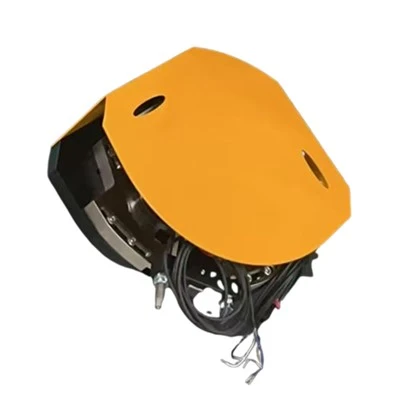
First, let’s define what a rear testing production line actually is, because there’s a lot of confusion out there. It’s not just a random check at the end of the assembly line. A rear testing line is a dedicated, sequential process that validates every critical function of a fully assembled product right before it’s packaged, stacked, or shipped. For automotive brake calipers, it might include pressure testing to ensure no fluid leaks, cycle testing to confirm the caliper engages and disengages within factory specs, and dimensional checks to make sure it fits perfectly with the brake rotor. For consumer electronics, it could include battery performance testing, durability checks for hinges or ports, and even stress testing to ensure the device doesn’t overheat after 8 hours of continuous use. The key here is “rear”—it’s the final checkpoint, the last chance to catch defects that slipped through earlier stages, where fixing them is exponentially cheaper.
Let’s break down that cost dynamic, because that’s what wakes up manufacturing owners who’ve never prioritized a rear testing line. I recently worked with a mid-sized automotive parts manufacturer in Detroit that skipped a dedicated rear testing line for their brake pads in 2021. A batch of 12,000 pads had a faulty friction material bond—at the assembly stage, the bond looked fine, but after shipping and installation, 1,200 units separated from the metal backing, leading to 37 customer complaints and 2 low-speed accidents. The recall cost them $1.2 million, not including the lost brand trust that made 8% of their long-term clients switch to competitors. If they’d run those same pads through a rear testing line that included a thermal bond test, those 1,200 defective units would have been caught before they left the factory, saving them roughly $950,000 in direct costs alone. That’s not an outlier: the Harvard Business Review estimates that fixing a defect at the final assembly stage is 10 times cheaper than fixing it at the field service stage, and 100 times cheaper than recalling products after they’ve been sold.
But cost savings are just the tip of the iceberg. A rear testing line also eliminates the “blame game” that plagues manufacturing teams. Let’s be real: when a product fails after sale, it’s easy for the assembly team to say “it’s a part defect” and the component supplier to say “our parts were fine.” With a dedicated rear testing line, you have a clear, documented record of every product’s performance before it ships. If a product passes all rear tests and still fails in the field, you can trace the root cause to field installation, user error, or even a rare environmental factor—not a manufacturing fault. We worked with a medical device maker last year that manufactured infusion pumps for hospitals. Early on, they had pumps failing after 6 months of use, with the team bickering for months over whether the fault was in the pump’s flow valve or the hospital’s software. Once they installed our rear testing line, which included a 1,000-hour continuous flow test, they caught that 0.3% of pumps had a misaligned flow valve that only developed after 400 hours of use. That meant they could fix it at the factory, rather than field-testing 5,000 pumps at a hospital’s cost, and the blame game stopped entirely because every pump’s test data was stored digitally.
Now, let’s talk about quality consistency. Even the most skilled assembly line workers make mistakes. Over a 12-hour shift, a worker might get tired, rush a step, or miss a small detail that’s critical. A rear testing line uses automated sensors and repeatable test sequences, so every product is tested the same way, every time, regardless of operator fatigue. For example, in the consumer electronics industry, a smartphone’s charging port is assembled by hand 90% of the time. Even the most experienced technicians might bend a tiny pin slightly during assembly. A rear testing line for smartphones will test port connectivity, plug durability, and current flow, catching that bent pin before the device is shipped. Without that test, the user might notice only after weeks of use, leading to returns and negative reviews. We’ve had clients in the consumer electronics space report a 70% drop in product returns after installing a rear testing line, which directly translated to a 12% increase in repeat customers in the first year.
Another underdiscussed benefit: compliance. Many industries have strict regulatory requirements that mandate final product testing. The automotive industry, for example, has ISO 16949 standards that require manufacturers to validate the performance of every critical component before shipping. The medical device industry is even stricter, with FDA regulations that require detailed records of every test run for every device. A rear testing production line isn’t just a nice-to-have—it’s often a legal requirement to sell products in regulated markets. A few years ago, we had a client in the aerospace parts space that was fined $2.5 million by the FAA for shipping 500 landing gear components without a final pressure test. They didn’t have a rear testing line, so they relied on sample testing, which the FAA deemed insufficient. Since installing our line, every test run is logged automatically, so regulators can pull up a component’s test data in 10 seconds, and they haven’t had a compliance issue since. That’s a huge risk mitigation factor that many small manufacturing owners overlook until it’s too late.
Wait, I know what some of you are thinking: “We’re a small operation. We don’t need a full rear testing production line.” That’s a common myth, and it’s one I hear at least once a week from new clients. Let’s bust that. A rear testing line doesn’t have to be a massive, 10-station setup that takes up half your factory floor. For small batch manufacturers of, say, power tools for home use, a 2-station rear testing line might include a power output test and a 10-minute durability run. For craft food equipment makers, it could include a sanitation test (critical for food safety) and a load test to make sure the mixer can handle heavy dough. The point is, it’s tailored to your product, your production volume, and your budget. We recently worked with a startup that makes portable blenders for backpackers. They started with a small 1-station rear testing line that checked battery life and motor speed, and within two years, they expanded to a 3-station line as sales grew. They told us that the biggest win was that it let them build a reputation for reliable products right out of the gate, which helped them secure a major retail partnership that required proof of final testing.
Now, let’s talk about the day-to-day value for the teams on the shop floor. Assembly line workers hate fixing defects that are already built into products, and managers hate dealing with the chaos of rework after products are shipped. A rear testing line moves that defect fixing to the final stage, where it’s isolated and easy to address. For example, if a batch of garden hoses has a faulty connector, the rear testing line will flag every defective hose right there on the line, so the team can fix the connectors before packaging, rather than having to repackage and ship defective hoses, then receive returns and deal with customer service complaints. I’ve seen shop floor morale improve by 25-30% at clients after installing a rear testing line, because workers don’t have to clean up mistakes made earlier in the process. They can take pride in building a product that actually works, without the stress of knowing a defect might end up costing the company money or upsetting a customer.
But here’s the thing: not all rear testing lines are created equal. A lot of suppliers sell generic testing machines that don’t integrate with your existing production line, which means you’re wasting time manually moving products from assembly to testing. That’s a mistake. A good rear testing production line should be modular, scalable, and fully integrated with your existing assembly process. It should also generate data that you can use to improve your earlier stages—for example, if 2% of products fail the thermal bond test, you can go back to the assembly stage and adjust the bonding temperature to fix the root cause, rather than just discarding defective products. That’s the value of data-driven testing: it’s not just about catching defects, it’s about preventing them from happening in the first place.
I’ve been in this business for a long time, and I’ve seen too many companies go under because they skipped final testing, and too many others grow exponentially because they invested in a rear testing line early on. The cost of a defective product isn’t just the cost of the product itself—it’s the cost of your reputation, your relationships with clients, and your peace of mind as a manufacturer. When you have a rear testing line, you know exactly what’s leaving your factory, and that knowledge is priceless.
At the end of the day, manufacturing is about trust. Customers trust that your product will work when they need it. Regulators trust that your product is safe. Your team trusts that they’re building a quality product. A rear testing production line is the single most effective way to build and maintain that trust. If you’re currently relying on sample testing, or skipping final testing altogether, you’re leaving millions of dollars on the table—and risking more than that.
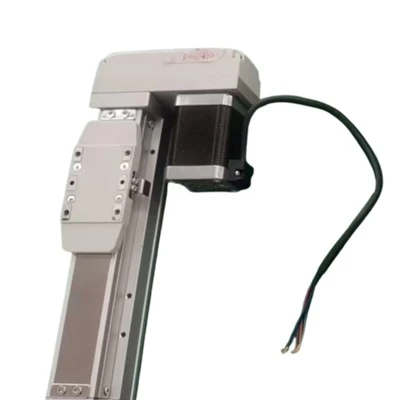
If you’re ready to stop playing catch-up with defects, reduce your product returns, improve your compliance, and boost your team’s morale, let’s talk. We can work with you to design a rear testing production line that fits your specific product, your production volume, and your budget, no matter how big or small your operation is.
Industrial Belt Guide Rail Drive Module References
- American Society for Quality (ASQ). (2022). Cost of Quality in Manufacturing: A Global Analysis.
- Harvard Business Review. (2021). The Hidden Costs of Product Defects in Consumer Goods.
- International Organization for Standardization (ISO). (2020). ISO 16949: Quality Management Systems for Automotive-Related Products.
- U.S. Food and Drug Administration (FDA). (2019). Final Manufacturing Requirements for Medical Devices.
- Society of Manufacturing Engineers (SME). (2023). Final Test Benchmarking Report for Small to Mid-Sized Manufacturers.
Yangning (Xiamen) Intelligent Technology Co., Ltd.
With abundant experience, we are one of the most professional rear testing production line manufacturers in China. As we have world-leading production equipment and strong manufacturing capabilities, we warmly welcome you to buy bulk advanced rear testing production line from our factory. Customized orders are welcome.
Address: Room 307-2, No.15 Duiying Road, Software Park Phase III, Torch Hi-Tech Zone, Xiamen, Fujian, China
E-mail: mia@ynautos.com
WebSite: https://www.ynautos.com/
