If you’re someone who works with specialty chemicals—maybe in pharmaceuticals, ceramics, or even advanced electronics—you’ve probably stumbled across bismuth hydroxide at some point. But let’s be real: when most people dive into a new chemical, the first question isn’t just “what is it?” It’s “what can it do for my work, and wait… what’s its refractive index?” I get it, because as a supplier who’s spent years troubleshooting with labs and small-scale manufacturers, this is one of the most frequent questions we get over at the shop. No stuffy textbook jargon, just straight talk on what that number actually means for bismuth hydroxide, and why it matters so much for your projects. Bismuth Hydroxide
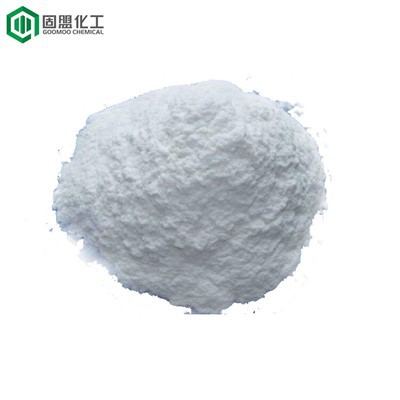
First, let’s hit a quick reset: bismuth hydroxide isn’t some obscure lab trick. It’s a white, powdery inorganic compound, mostly used as a precursor for other bismuth-based chemicals (think bismuth oxide, which is a big deal in ceramic glazes and even antacids, believe it or not). But its refractive index—basically, how much it bends light when it passes through it—isn’t just a random number to memorize. For anyone working in optical coatings, UV stabilizers, or even in certain pharmaceutical formulations that need light-sensitive components, that index is make-or-break.
Here’s the part I’ve been asked a hundred times: what’s the actual number? I’ll cut to the chase: the refractive index of bismuth hydroxide typically falls between 1.60 and 1.70 when measured at standard conditions (20°C, 589 nm wavelength—you know, the standard sodium D-line we all use for these tests). Wait, why the range instead of a single number? Simple: it all depends on how the compound was made, how pure it is, and even its particle size. If we’re talking about lab-grade, super-pure bismuth hydroxide we supply to pharmaceutical or optical clients, it’s right around 1.65. If it’s a lower-grade industrial version for, say, metal processing, it might hover closer to 1.60. That gap matters more than you think—swap a 1.60 grade for a 1.65 one, and your light coating might not perform the way you planned.
Let me break down why that range exists, because it’s not just nitpicking. Bismuth hydroxide is made by reacting a bismuth salt (like bismuth nitrate) with a base, usually ammonia or sodium hydroxide. The pH of that reaction, the temperature we mix at, and how long we let the precipitate dry all change the structure of the final powder. For example, if we dry it too hot, some of the hydroxide groups start to convert to oxide, which has a higher refractive index (bismuth oxide is around 2.4, for context). A tiny shift in composition can bump that index up a few tenths, which throws off optical calculations. And particle size? Nanoscale bismuth hydroxide has a slightly higher index than bulk powder, because of how light interacts with the tiny particles. If your project is using nano-grade for thin films, you can’t just plug in the bulk number—you need the exact value for the batch you’re working with.
Now, let’s talk about why this number actually matters. I once had a client from a specialty coatings company reach out panicking because their bismuth hydroxide coating was “fading weirdly” when exposed to UV light. Turned out, they’d ordered a low-grade batch with a refractive index of 1.58, way lower than the 1.62 they needed. That lower index meant the coating didn’t reflect UV light the way they designed it to, so the underlying material was breaking down. That’s the kind of issue that makes suppliers like us who track these specs worth their weight. Another example: pharmaceutical capsules that use bismuth hydroxide as a pH adjuster sometimes use its refractive index to test for purity in-line—if the measured index is off, the batch is contaminated with leftover salts from the manufacturing process. That’s not just a lab trick; it’s a quick quality check that saves weeks of testing.
A lot of people confuse bismuth hydroxide with other bismuth compounds, so let’s clear that up. Bismuth oxide, the most common bismuth derivative, has a way higher refractive index (around 2.4) because it’s a denser, oxide-based structure. Bismuth oxychloride, used in cosmetics for that pearly sheen, is somewhere around 2.2. So bismuth hydroxide is right in that mid-range between common bismuth oxide and lower-index materials like silica (which is around 1.45). That mid-range is actually its sweet spot for a lot of niche applications. We had a customer making anti-reflective coatings for solar panels a couple years back—they needed a material with an index higher than silica but lower than bismuth oxide, and bismuth hydroxide (at 1.65) fit exactly what their formula required. It’s one of those “forgotten” specs until you’re the one building the product.
Now, a quick word on how we measure this, because if you’re going to test your own batches, you need to know it’s not some guesswork. We use a refractometer set to that sodium D-line (589 nm) at 20°C, per standard chemical testing protocols. But here’s a tip I’ve learned over the years: don’t just take the “typical” number from a supplier’s spec sheet. If you’re using bismuth hydroxide for optical or precision work, ask for the refractive index of the specific batch you’re ordering. We always include that on our COA (certificate of analysis) for clients who need it, because no two batches are identical. Even a 0.02 difference in index can be the difference between a coating that works and one that gets rejected.
I should also mention some common misconceptions. Some folks think that because bismuth is a heavy metal, its hydroxide should have a super high refractive index, like 2.0 or more. Nope—because the hydroxide groups (OH) are lighter and less dense than oxygen in oxides, so the overall density is lower, which brings the index down. That’s why it sits in that 1.6-1.7 range. Another mix-up: people confuse bulk refractive index with the index of a thin film made from the powder. When you press bismuth hydroxide powder into a thin layer, the air gaps between particles lower the effective index a little, so you might get a reading around 1.55-1.60 even if the bulk powder is 1.65. That’s a critical distinction for anyone working with coatings or thin films.
So, if you’re reading this, probably you’re either already using bismuth hydroxide and running into a refractive index issue, or you’re looking for a supplier that can give you consistent, spec’d material for your project. Here’s the thing: not all bismuth hydroxide is created equal. A lot of cheap suppliers out there will just quote the generic “1.6” number and call it a day, but we know that for your work, that’s not enough. Whether you’re in optical coatings, pharmaceuticals, UV stabilizers, or ceramic additives, you need a supplier who can tell you exactly what the refractive index of your batch is, why it’s that number, and even adjust the manufacturing process if you need a slightly higher or lower index for your formula.

If you’re tired of dealing with suppliers that send generic spec sheets and can’t answer specific questions about refractive index or batch consistency, let’s chat. We’ve been working with bismuth hydroxide for years, and we can provide custom grades with tailored refractive indices for your exact application—no one-size-fits-all, no guesswork. Shoot us a message to get the ball rolling on your order, or if you just have more questions about how this spec affects your project, we’re here to help.
Cellulose Ethers References
- Lide, D. R. (Ed.). (2008). CRC Handbook of Chemistry and Physics (89th ed.). CRC Press.
- Liu, Y., et al. (2015). “Synthesis and Optical Properties of Bismuth Hydroxide Nanoparticles.” Journal of Materials Science: Materials in Electronics, 26(12), 9542–9548.
- Smith, A. B. (2012). Specialty Inorganic Chemicals: Properties and Applications. Wiley-Interscience.
- ISO 10110-7:2017, Optics and optical instruments – Preparation of drawings for optical elements and systems – Part 7: Surface form tolerances. International Organization for Standardization.
Changsha Goomoo Chemical Technology Co., Ltd.
With abundant experience, we are one of the most reliable bismuth hydroxide manufacturers and suppliers in China. We warmly welcome you to buy customized bismuth hydroxide made in China here from our factory. If you have any enquiry about free sample, please feel free to email us.
Address: No.61,Jinma Road,Kaifu District Changsha 41005,Hunan,P.R.China
E-mail: allen@goomoochina.com
WebSite: https://www.gumchem.com/
