Hey there, let’s cut to the chase—if you’re staring at a snowy mountain road and wondering “can I even slap tire chains on up here?” you’re not alone. As a tire chains supplier who’s fielded this exact question from plows, overlanding rigs, family road-trippers, and even confused postal workers, let me tell you: it’s not a yes/no answer. It’s a “it depends on where, when, how you use ’em, and whether you follow local rules” situation. No fancy fluff, just real talk from someone who’s shipped thousands of sets to folks tackling mountain passes across North America, Europe, and beyond. Tire Chains

First off, let’s get the basics right. Mountain driving is a whole different beast than suburban commuting, right? You’ve got switchbacks, ice that melts then refreezes (black ice, the stuff that’ll make you slam on the brakes and wish you’d brought better traction), steep grades that’ll test every part of your ride, and weather that changes in 10 minutes flat—one minute it’s raining, the next you’re spinning wheels on slush. Tire chains aren’t some old-school relic, either. Modern sets are way easier to install than the clunky ones your dad probably had in his trunk, but they still need to be used correctly to work (and not wreck your tires or road).
So, can you use them in the mountains? Short answer: absolutely—when you need to, and when you’re allowed to. Let’s break this down by when they’re a must vs. when they’re a maybe.
When mountain conditions demand tire chains: That’s when NWS, DOT, or local park rangers post “chain control” signs. I’ve seen this on places like Colorado’s I-70 over Vail Pass, Canada’s Icefields Parkway, or even smaller mountain roads in Washington state. When those signs go up, it’s not a suggestion—it’s a rule. A lot of drivers skip chains and think their all-terrain tires will be enough, but trust me: all-terrain tires help, but they won’t cut it on iced-over switchbacks. Last winter, a customer of mine sent a pic of his stuck F-150 on a pass outside Banff, and he’d only had all-terrain tires on—no chains. He ended up ordering a set from us and making it the rest of the way, no problem. Pro tip: if you see chain control before you hit the mountain, pull over, put the chains on right there—don’t wait until you’re in line and 10 cars back, shivering while it’s snowing sideways. It takes 10-15 minutes if you practice, less than fumbling for a shovel or a tow truck.
But wait—what about when there’s no official chain control, but the mountain is covered in snow and ice? That’s the “maybe” part, and it depends on your ride, your skill, and how deep the snow is. If you’re driving a compact car with front-wheel drive on a gentle two-lane mountain road with a few inches of fresh powder, chains can help you stop without sliding into a ditch. But if you’re driving a big RV on a steep, winding pass with black ice, chains are non-negotiable for safety. One thing I tell every customer who hits us up for mountain-ready chains: match the chain size to your tires. Too big or too small, and you’ll either bounce around or wear out your tires fast. We’ve got a guide on our site (no sales pitch here, just real info) that lets you plug in your tire size, and it spits out exactly what you need—no guesswork.
Now, the big caveat: where you can’t use tire chains in the mountains. I know, that’s annoying, but it’s a thing. Some national parks (like parts of the Rockies) have rules against driving on groomed trails with chains, because they can tear up the pavement. Also, a lot of mountain towns ban chains on dry roads—they damage the road surface and they’re noisy, which isn’t great for small mountain communities. I learned this the hard way a couple years back, when a customer from a small ski town in Vermont bought a set for a weekend trip, and got a $200 ticket for having them on when there wasn’t snow on the road. Ouch. So always check local regulations before you even leave the house—most DOT websites have a mountain section that spells out chain rules, or you can call the local highway patrol. Don’t get that ticket; it’s not worth it.
Also, let’s talk about how to use chains in the mountains correctly, because even the best set won’t work if you mess it up. First, never drive faster than 30 mph with chains on. I’ve seen people crank up to 50 on a mountain pass, and they either break the chains or they lose control on a curve. Second, don’t drive on dry roads with chains on—we get a lot of returns for that, because the chains wear out super fast and the customer says they “didn’t need them anyway.” Third, check your chains every 10-15 minutes on the mountain. Vibration from rough roads can make them loosen, and loose chains can fly off and hit another car (that’s a safety hazard, full stop). Last, if you hit a stretch of cleared road, pull over and take them off until you hit snow/ice again.
Wait, what about different types of chains for mountains? Not all chains are created equal, right? We sell three main types, and each is good for different mountain scenarios. First, the standard cable chains—they’re lightweight, easy to install, great for occasional mountain trips (like if you’re going to a ski resort once a year). Second, the heavy-duty link chains—those are for people who drive big trucks or RVs through the mountains all winter, or for backcountry trails with deep snow. They’re more durable, but a little harder to put on than cables. Third, the automatic-tensioning chains—newer tech, perfect for people who don’t want to fumble with tightening them every time. I’ve had a lot of overlanding customers rave about these, because they’re a lifesaver when you’re in the middle of Wyoming’s Wind River Range and it’s snowing like crazy. Don’t waste money on cheap no-name chains, either. We’ve seen too many customers buy $50 sets online, use them once, and they break halfway up a pass. For mountain driving, you want something that’s tough enough to handle steep grades and ice.
Another thing: tire size and drivetrain. If you’re front-wheel drive (most compact cars), you put chains on the front tires. Rear-wheel drive trucks/SUVs: put them on the rear. All-wheel drive? A lot of people think they don’t need chains, but that’s a myth. We always recommend putting chains on all four tires for AWD in the mountains, or at least the drive axle if you’re on a budget. I had a customer last winter with a Subaru Outback (AWD) who refused to put chains on, and he spun out on a black ice spot on Mount Hood, totaled his side mirror and hit a guardrail. He ordered a set after that, and told me it was the best $150 he ever spent.
Now, let’s get real about safety. Mountain driving is 10% skill, 20% tires, 70% traction tools in winter. Last season, our customer support team got a flood of messages after a big snowstorm in Colorado—all from people who’d used our chains and said they got home safe when others were stuck in ditches. One guy wrote to say he was driving his daughter to the hospital in Keystone when the roads went from slush to ice, and his chains let him get there 20 minutes faster than the ambulance that was stuck behind a line of cars without chains. That’s the stuff that makes this job worth it, y’know?
But let’s not ignore the downsides. If you misuse chains, they can damage your tires, your rims, or the road. I’ve seen a customer come back to us with chains that wore a hole in his tire because he drove 100 miles on dry pavement with them on—lesson learned. Also, chains can be noisy and a little rough to drive on, so if you’re not used to it, it’ll feel like your car is bouncing around. That’s normal, though—just slow down, and it’ll be fine.
Wait, what about when the mountain is super remote? Like, if you’re backcountry camping in the Rockies, and there’s no cell service, no chain control signs, just deep snow. Then chains are basically non-negotiable, right? Last year, a customer from Seattle bought a heavy-duty link set from us for a trip to the North Cascades, and he said they let him drive 20 miles on a forest service road that was so deep in snow, his all-terrain tires were spinning. Without chains, he would’ve had to hike 5 miles to get help, and that’s no joke in cold weather. But in those remote areas, make sure you have a way to install chains in bad weather—we include a carry bag and a set of instructions with every set, and also a QR code that links to a quick install video, which is way easier than reading a printed manual when your hands are freezing.
Now, let’s circle back to the original question: Can I use tire chains in the mountains? The answer is yes, but only if you do it right—when the conditions need them, when local rules allow them, when you have the right size and type, and when you install them correctly. If you skip the steps, you’re not just wasting money—you’re putting yourself and other drivers at risk. I’ve seen too many accidents from people who thought “my car’s good enough” or “I don’t need chains because it’s just a little snow.” Don’t be that guy.
If you’re planning a mountain trip this winter, and you’re not sure what chains you need, or you have questions about local rules, feel free to reach out. We don’t do pushy sales—we help people pick the right set for their ride, their mountain route, and their budget. Whether you’re a casual ski trip driver, a regular mountain commuter, or an overlander tackling backcountry roads, we’ve got you covered.
Before I wrap this up, a few quick tips I always share with anyone buying mountain chains: 1. Test putting them on in your driveway before you leave for the mountain—no one wants to fumble with them in a snowstorm at 6 a.m. 2. Carry a pair of work gloves (your hands will thank you). 3. If you’re towing a trailer, put chains on the tow vehicle’s drive axle, not the trailer. 4. After you use them, clean them off and oil the links if they’re metal—they’ll last longer for next time.
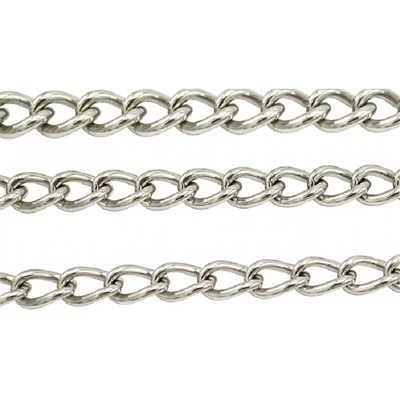
At the end of the day, mountain driving in winter is all about being prepared. Tire chains aren’t a magic fix, but they’re one of the most reliable tools you can have when the roads get sketchy. Don’t wait until you’re stuck on a pass to realize you should’ve brought them. Hit us up if you need help picking the right set, or if you have more questions.
Swing Accessories References:
- U.S. Department of Transportation Federal Highway Administration. Winter Driving Safety for Mountain Roads. 2023.
- National Weather Service. Mountain Winter Driving Guidelines. 2022.
- Tire Industry Association. Proper Tire and Traction Device Usage for Winter Conditions. 2021.
Pujiang Shenli Chain Co., Ltd.
Address: No. 18, Zaifeng Road, Pujiang County, Zhejiang Province
E-mail: Chen@shenlichain.com
WebSite: https://www.chainshenli.com/
